If you’re researching ERP for apparel manufacturing, chances are you’ve already lived through the alternative. Spreadsheets that don’t talk to each other. A production floor that runs on tribal knowledge. An ERP system that was built for a generic manufacturer and never quite fits the way your factory actually operates.
ERP for apparel manufacturing is the difference between a factory that knows exactly where every order stands and one that finds out too late that a shipment slipped, a fabric roll ran short, or a costing sheet was wrong from the start. PolyPM was built for exactly this problem, and it was built by people who understand apparel manufacturing from the cutting room to the loading dock.
Why Generic ERP Systems Break Down in Apparel Manufacturing
Most ERP platforms were designed for manufacturers who make one version of one product. Apparel manufacturing doesn’t work that way. A single style can carry a dozen colorways, multiple size ranges, several fabric substitutions, and a bill of materials that changes mid-season when a mill runs out of a shade. Generic ERP for apparel manufacturing tends to treat these variables as exceptions instead of the daily reality they are.
The result is predictable. Purchasing orders against a bill of materials that hasn’t been updated in weeks. Production planners working from a cut plan that doesn’t match the fabric actually on hand. Finance reconciling costs at the end of a season only to discover margins eroded from the first cutting ticket. These aren’t rare mistakes. They’re what happens when ERP for apparel manufacturing is treated as a generic finance and inventory tool rather than a system built around how garments actually get made.
Apparel factories that outgrow spreadsheets often move straight into an ERP platform that requires months of customization just to track a bundle through cut, sew, and finish. That customization becomes the fragile layer that breaks with every software upgrade. It’s a pattern PolyPM was built to avoid entirely.
→ Is your current system forcing your team to build workarounds just to track a style through production? Talk to the PolyPM team about ERP for apparel manufacturing that fits the way your factory already runs.

What ERP for Apparel Manufacturing Should Actually Do
A real ERP for apparel manufacturing needs to manage far more than orders and invoices. It needs to hold production planning, material requirements planning, costing, purchasing, shipping, and financial management on one record that every department can trust.
Production planning has to account for cut-and-sew realities like bundle tracking and subcontractor capacity, not just generic work orders. Material requirements planning has to work in yards and rolls, not abstract units. Costing has to update automatically when a bill of materials changes, rather than sitting frozen at whatever number was entered during development.
This is precisely where PolyPM was designed to operate. PolyPM is an apparel ERP and apparel PLM platform built on a single database, so a change in one part of the system moves through every downstream process automatically.
When a fabric substitution happens in development, purchasing, costing, and cut planning all see it immediately. That’s what ERP for apparel manufacturing should look like, and it’s what most apparel manufacturers never get from platforms adapted from other industries. You can see the full breadth of what PolyPM manages as apparel manufacturing ERP software built specifically for this kind of production.
→ Does your team re-enter the same style data three or four times across different systems? Contact PolyPM and find out what one connected system actually looks like.
PolyPM Built for Apparel Manufacturing, Not Adapted to It
Here’s the distinction that matters most when you’re comparing ERP for apparel manufacturing options. Most platforms on the market started as generic ERP software and were later configured, at real cost, to approximate apparel workflows. PolyPM started from the opposite direction. It was built from day one around cut-and-sew production, and every module reflects that.
PolyPM manages styles, colorways, bills of materials, tech packs, lab dips, and measurements as native product development functions, not bolted-on extensions. Production data flows directly from development into manufacturing without duplicate entry. Order management, purchasing, and vendor management all live inside the same platform that tracks fabric rolls and shop floor progress.
This matters because ERP for apparel manufacturing built this way behaves differently under pressure. When a retailer changes a delivery date or a mill ships fabric late, a system built for apparel can absorb that change and show the impact across purchasing, production, and shipping in real time. A generic system configured after the fact usually can’t, because the connections between those functions were never designed to exist.
PolyPM customers aren’t managing a patchwork of add-ons. They’re running one platform that was purpose-built for the realities of apparel, textile, and sewn products manufacturing from the start.
→ Tired of stitching together software that was never built for your production floor? Reach out to PolyPM and see what purpose-built ERP for apparel manufacturing actually delivers.
Production Visibility Without Chasing the Shop Floor
Ask any production manager what keeps them up at night and the answer usually comes down to visibility. Where is order 4521 right now? Which bundles are behind? Will today’s cut plan actually ship on time?
Without a connected system, answering those questions means walking the floor, calling supervisors, or waiting for an end-of-shift report that’s already out of date.
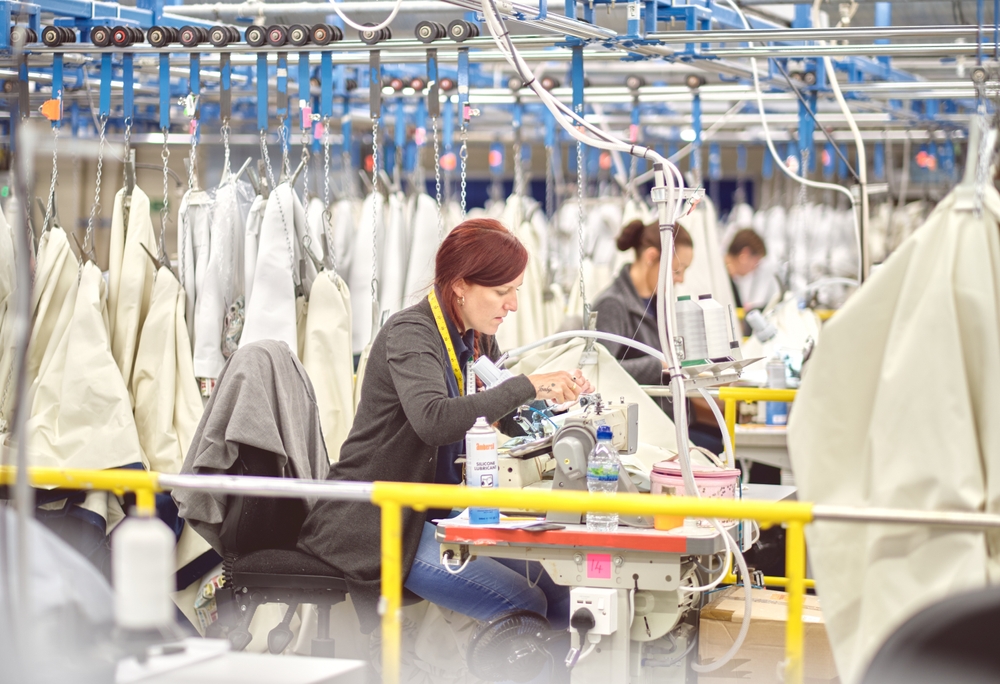
ERP for apparel manufacturing has to solve this at the source. PolyPM tracks work in progress across cutting, sewing, decoration, and finishing as it happens, not as a summary produced after the fact. Bundle tracking shows exactly where each unit sits in the production sequence. Subcontractor management gives the same visibility over work happening outside your own walls, so materials and progress at an outside shop are never a blind spot.
Decoration processes like screen printing, embroidery, and sublimation are managed as native production steps inside PolyPM rather than tracked separately in a spreadsheet somewhere else.
That means a single order moving through cut, sew, and decoration stays visible from start to finish inside one system. This is the kind of production visibility that separates genuine ERP for apparel manufacturing from a system that only tracks finished units after they’ve already shipped. PolyPM’s apparel production software was built around exactly this need.
Inventory That Reflects What’s Actually on the Cutting Table
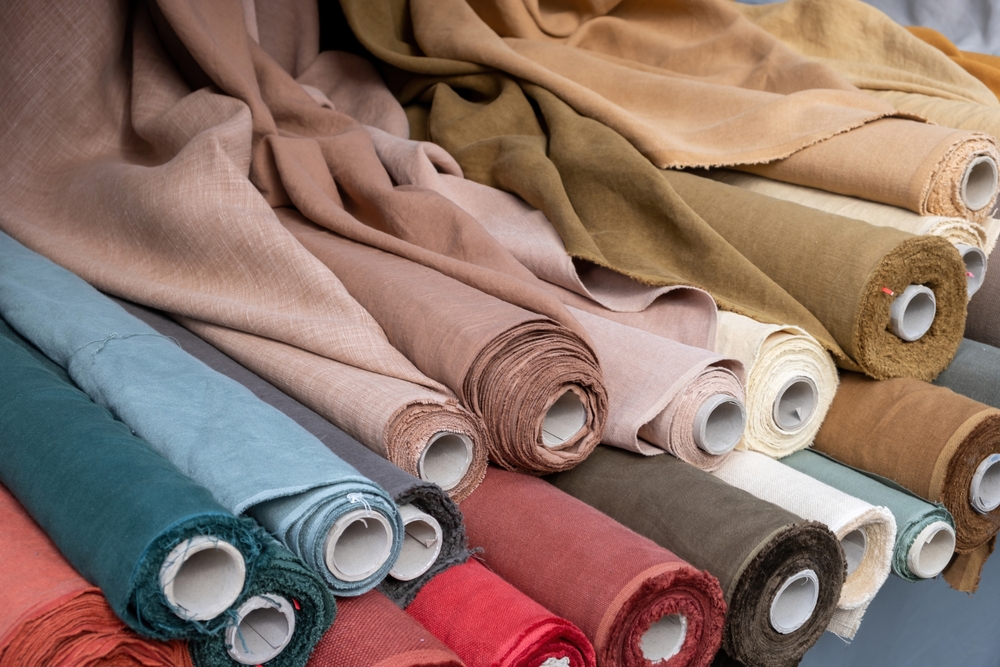
Fabric is usually the largest single cost in an apparel manufacturer’s budget, which is why inventory accuracy carries so much weight in any evaluation of ERP for apparel manufacturing. Generic inventory modules count units. Apparel inventory has to track rolls, dye lots, width, shrinkage, and yardage, because a roll of fabric isn’t a fixed unit the way a finished part might be in other industries.
PolyPM manages inventory at the roll level, connecting dye lot, width, and yardage directly to the production orders that consume them. Shortage alerts fire before a cut plan gets committed rather than after cutting has already started, which is usually when the real cost of a shortage lands. Subcontractor inventory stays visible too, so materials sitting at an outside facility are never invisible to planning.
This is a core requirement of any serious ERP for apparel manufacturing, and it’s one of the areas where generic platforms most often fall short. Real-time visibility across inventory, purchasing, and production is what keeps a factory from discovering a shortage only after fabric has already been spread and cut. PolyPM’s apparel inventory management software was designed around this exact problem.
→ How often does your team discover a fabric shortage after cutting has already started? Talk to PolyPM about inventory built for what apparel manufacturing actually requires.
Product Development and Production on One Record
Most factories evaluating ERP for apparel manufacturing eventually run into the same wall. Product development lives in one system, or in spreadsheets, while production and inventory live somewhere else entirely. Every style change means updating multiple places by hand, and every missed update becomes a costing error or a production delay waiting to happen.
PolyPM closes that gap by running PLM and ERP on the same database. Line planning, style management, bills of materials, tech packs, colorways, and sample management all sit inside the same platform that drives purchasing, costing, and production. When a bill of materials changes during development, it updates costing and purchasing automatically instead of waiting for someone to notice the discrepancy weeks later.
This single-record approach is one of the clearest advantages PolyPM offers over ERP for apparel manufacturing platforms that keep PLM and ERP as separate systems bridged by manual exports. You can explore how PolyPM manages the full development cycle through its fashion apparel PLM software, which was built to work as one system with production rather than alongside it.
→ Is a change made during product development actually reaching your production floor without someone re-typing it? Ask the PolyPM team how one connected record eliminates that gap.
Pattern Accuracy Feeds Directly Into Your ERP
Fabric waste starts long before the first roll hits the cutting table. It starts in pattern grading and marker making, where a poorly optimized marker can quietly cost a manufacturer thousands of yards over a season. Most conversations about ERP for apparel manufacturing skip this step entirely, treating pattern design as a separate concern from the ERP itself.
PolyPM doesn’t treat it that way. Alongside PolyPM, Polygon Software builds PolyNest, a pattern design system that handles grading, marker making, and marker optimization with direct integration back into PolyPM’s production data. A marker built in PolyNest feeds fabric consumption figures straight into PolyPM’s costing and cut planning, so the ERP is working from actual yield rather than a static estimate entered once and never revisited.
This connection between pattern accuracy and ERP for apparel manufacturing is where real fabric savings get realized. Manufacturers running PolyNest alongside PolyPM see marker efficiency improvements translate directly into more accurate costing and tighter fabric purchasing, because the two systems share the same data instead of operating in isolation. Learn more about how PolyNest pattern design software connects pattern accuracy to the rest of your production data.
→ Is your marker efficiency data actually reaching your costing sheets, or living in a separate system nobody checks? Contact PolyPM to see pattern design and ERP working from the same numbers.
The Real Cost of Choosing the Wrong ERP for Apparel Manufacturing
The sticker price of an ERP system is rarely the real cost. The real cost shows up later, in reimplementation projects, in custom workflows that break with every upgrade, and in the months of disrupted operations that come with switching platforms after the first one didn’t fit.
Manufacturers who choose generic ERP for apparel manufacturing often end up building custom workarounds to handle bundle tracking, roll-level inventory, or decoration production, since none of those exist natively in a platform built for other industries. Those custom workflows are usually the first things to break during a system upgrade, because they were never part of the core platform to begin with.
Reimplementation projects built around fixing that mismatch can run into hundreds of thousands of dollars and stall operations for months, a cost curve laid out in detail on PolyPM’s textile production software system cost breakdown.
PolyPM avoids that trap by building apparel-specific functions like cut planning, roll-level inventory, and decoration management into the core platform from the start. Customers upgrade version to version without reimplementation projects or months of downtime, and custom workflows stay intact because they were never external patches in the first place. That’s a structural advantage worth weighing carefully against any generic garment manufacturing ERP software system you’re evaluating.
→ Has a previous software switch cost you more in reimplementation than the platform itself? Talk to PolyPM about ERP for apparel manufacturing that doesn’t require starting over with every upgrade.
How to Evaluate ERP for Apparel Manufacturing Before You Buy
Choosing ERP for apparel manufacturing is a long-term decision, so it’s worth being specific about what to check before signing a contract.
Start with bundle tracking and cut planning. If a vendor can’t show you how their system tracks a garment through cutting, sewing, and finishing, it probably wasn’t built for cut-and-sew production. PolyPM handles this natively, with bundle-level visibility built into the core platform rather than added as a workaround.
Check how inventory is tracked. Roll-level detail, dye lots, and shrinkage factors matter in apparel in ways they simply don’t in other industries. PolyPM tracks all of this as standard functionality.
Ask how PLM and ERP connect. If the answer involves exporting files between two separate systems, expect ongoing data entry errors. PolyPM runs both on one database.
Ask about decoration. If your operation runs screen printing, embroidery, or sublimation in-house, confirm the ERP treats that as production rather than an outsourced afterthought. PolyPM manages decoration as a native manufacturing process.
Finally, ask about upgrade history. Vendors who require reimplementation with every major release are signaling that their apparel functionality was bolted on rather than built in. PolyPM customers move through version upgrades without rebuilding their environment.
→ Ready to compare your current system against ERP for apparel manufacturing built specifically for cut-and-sew production? Reach out to PolyPM to see the difference in a live demonstration.

Choose PolyPM ERP for Apparel Manufacturing
Choosing ERP for apparel manufacturing shouldn’t mean settling for a generic platform stretched to cover apparel workflows it was never designed to handle. PolyPM was built from the ground up around the realities of cut-and-sew production, connecting product development, inventory, production, and pattern design on one system instead of forcing your team to bridge the gaps manually. From roll-level inventory to bundle tracking to PLM data that flows straight into costing, PolyPM gives apparel manufacturers the visibility and control that generic ERP simply can’t match.
If you’re ready to see what ERP for apparel manufacturing looks like when it’s built for your industry instead of adapted to it, the PolyPM team is ready to show you.
ERP for Apparel Manufacturing: FAQs
What is ERP for apparel manufacturing?
ERP for apparel manufacturing is a business management system that connects product development, inventory, production, purchasing, and financials specifically around cut-and-sew workflows like bundle tracking, roll-level fabric inventory, and bills of materials that change by colorway and size. Unlike general business software, apparel-focused ERP is designed around the unique processes manufacturers deal with every day, from managing seasonal collections and material availability to tracking production progress across multiple stages. It gives teams a central view of operations so designers, planners, production managers, and finance teams can work from the same accurate data.
How is ERP for apparel manufacturing different from generic ERP software?
Generic ERP tracks finished units and standard bills of materials. ERP for apparel manufacturing has to handle fabric rolls, dye lots, size and color matrices, and bundle-level production tracking, none of which exist in ERP platforms built for other industries. Apparel production involves many variables, including changing specifications, multiple sizes and colorways, complex material requirements, and detailed manufacturing steps. An apparel-specific ERP system is built to reflect these realities, helping manufacturers reduce manual tracking, improve production visibility, and avoid the limitations that come from adapting software designed for unrelated industries.
Does PolyPM handle multi-location or multi-facility production?
Yes. PolyPM was built to give apparel manufacturers visibility across multiple facilities, countries, and subcontractors within a single connected system rather than separate instances that need to be reconciled manually. This allows businesses to monitor production activity, inventory levels, purchasing, and product information across their entire supply chain. Whether production is handled internally, through overseas facilities, or with external partners, PolyPM helps maintain consistent processes and accurate information across locations.
Can PolyPM integrate with pattern design and marker making software?
Yes. Polygon Software’s PolyNest pattern design system connects directly to PolyPM, feeding marker efficiency and fabric consumption data straight into ERP costing and cut planning. This integration helps manufacturers make more informed decisions earlier in the production process by connecting design, material planning, and manufacturing requirements. By reducing disconnected workflows, teams can improve accuracy in estimating costs, planning fabric usage, and preparing production orders.
How long does it take to implement ERP for apparel manufacturing like PolyPM?
Implementation timelines vary based on the number of facilities, users, and existing data that needs to be migrated. PolyPM’s team scopes implementation around your specific production setup rather than applying a one-size-fits-all timeline. Factors such as current systems, workflow complexity, and the level of customization required can influence the process. A structured implementation approach helps ensure the system is configured correctly and supports long-term operational goals.
What does ERP for apparel manufacturing typically cost?
Cost depends on the number of users, modules, and deployment method. What matters more over time is avoiding the hidden reimplementation costs that come with generic platforms not built for apparel, which PolyPM’s team can walk through in detail. Investing in software designed specifically for apparel manufacturing can help reduce inefficiencies caused by manual processes, disconnected tools, and workarounds. The right ERP system should deliver value by improving visibility, accuracy, and control throughout the manufacturing process.
Does PolyPM manage in-house decoration like screen printing and embroidery?
Yes. PolyPM manages screen print routing, embroidery production, and sublimation as native manufacturing operations rather than outsourced work tracked outside the system. This allows manufacturers to manage decorated products with the same level of visibility as other production activities. By including decoration workflows within the ERP environment, teams can better coordinate scheduling, materials, labor, and production tracking.
Who is PolyPM built for?
PolyPM is built for apparel, textile, garment, uniform, workwear, sportswear, and other sewn products manufacturers who need production, inventory, and product development connected in one system rather than managed across disconnected software and spreadsheets. It is designed for companies that need greater control over complex manufacturing operations, from initial product development through production and delivery. By bringing key processes together, PolyPM helps manufacturers create a more connected and efficient workflow as they scale.