Manufacturing inventory software only helps an apparel plant if it understands what a roll of fabric actually is. Most systems record 4,000 yards of knit as a single number, and the cutting room pays for that shortcut every week.
PolyPM was built differently. Our manufacturing inventory software tracks each roll by dye lot, shade, width, and location, then follows the material through markers, cut tickets, bundles, and finished goods. This guide shows where generic tools break down, how PolyPM tracks fabric to the roll, and what that means for production, purchasing, and margin.
→ Are you cutting from stock numbers your team does not fully trust? Talk to the PolyPM team about manufacturing inventory software built only for apparel.
Why Does Most Manufacturing Inventory Software Fall Short in Apparel Plants?
Manufacturing inventory software was designed for factories that count units. Apparel plants do not count units until the very end of the process. They count yards, rolls, dozens, bundles, and finally pieces by size and color. A system that cannot move between those measures will always disagree with the warehouse floor.
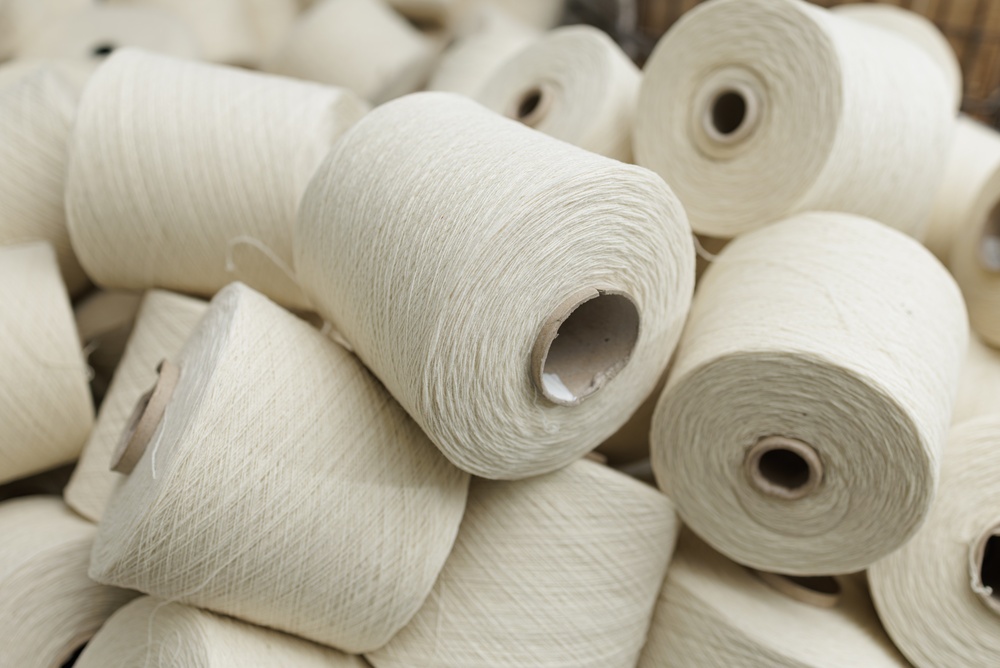
A roll is not a yard. A purchase order says 4,000 yards of jersey. Receiving logs 4,000 yards. The cutting room needs to know how many rolls arrived, which ones share a dye lot, how wide each roll is, and how much shrinkage the lab reported. When the record only holds the total, the cut planner walks the warehouse to find out.
Shade and dye lot decide what can be cut together. Two rolls of the same navy can look different under the cutting lights. Mixing them inside one garment lot creates shade variation that a customer will reject. Generic manufacturing inventory software has no field for this, so factories keep it on a clipboard or in one person’s memory.
Trims hold up more orders than fabric does. Zippers, labels, elastic, and drawcords cost little and stop entire sewing lines. Shortages usually trace back to consumption that was estimated from a style average instead of calculated from the bill of materials.
Work in progress disappears after the cutting table. Bundles travel through sewing, decoration, and outside contractors. Without bundle-level tracking, nobody can say how many units are in progress or which orders are exposed. Many plants that run on clothing manufacturing software designed for the whole factory solve this problem first, because WIP is where inventory accuracy is lost.
Spreadsheets age badly. A sheet updated on Friday is wrong by Monday. Every manual copy between purchasing, the warehouse, and finance adds error, and by the end of a season the book balance and the physical count no longer agree.
These problems share one root cause. Most manufacturing inventory software was never designed around how apparel gets made. That is the gap PolyPM closes.
→ Is your planning team still confirming material by walking the aisles? Ask PolyPM how roll-level records remove that step.
How Does PolyPM Manufacturing Inventory Software Track Fabric Down to the Roll?
PolyPM manufacturing inventory software gives every roll its own identity the moment it arrives. That identity stays attached to the roll through allocation, spreading, cutting, and the final remnant. Our apparel inventory management software centralizes rolls, dye lots, shrink test results, trims, and embellishment components in one structured record, so nothing lives in a side spreadsheet.
Here is how PolyPM tracks fabric from the dock to the cutting table.
Receiving captures the detail that matters. Each roll is logged with supplier, dye lot, shade, width, length, and warehouse location.
Dye lot and shrink results stay with the roll. Lab shrink results do not sit in a quality binder. In PolyPM manufacturing inventory software, shrink percentages feed directly into marker efficiency and cut planning, so the system reflects real yield instead of nominal yardage.
Allocation reserves the right roll for the right order. When an order is confirmed, PolyPM manufacturing inventory software reserves material against it. A roll committed to one customer cannot be quietly pulled into another job on a busy Friday afternoon.
Issues move material into work in progress at the moment of use. Fabric issued to a cut ticket leaves raw material and enters WIP immediately. The inventory balance reflects the factory as it is today, not as it was at the last count.
Remnants remain visible. Leftover yardage returns to stock with its roll identity intact, which means a half-used roll is still a usable roll rather than a mystery on a shelf.
The outcome is a single manufacturing inventory software record that purchasing, planning, the cutting room, and finance all trust. When an operations manager asks how much of a fabric is truly available, the answer comes from the system and not from a walk through the warehouse.
→ Would your cut planners decide faster if every roll carried its lot, shade, and shrink data? Book a PolyPM walkthrough and see it on your own materials.
What Makes PolyPM Manufacturing Inventory Software Different From Generic ERP Modules?
Nearly every ERP vendor can show a stock screen in a demo. The differences appear when your styles, sizes, colorways, and contractors enter the picture. PolyPM manufacturing inventory software is different in several practical ways.
Apparel structures are standard. Size and color matrices, colorways, cut tickets, bundles, roll inventory, and marker yields exist in PolyPM manufacturing inventory software as native objects. On a general platform, the same concepts arrive through custom fields, add-on modules, or a partner template. Each of those layers needs maintenance, testing, and fresh budget at every upgrade. If you are comparing options, our pages on PolyPM vs NetSuite and PolyPM vs Odoo lay out the differences in detail.
PLM and ERP share one database. Product development and inventory are not connected by a sync job. A bill of materials change made by a technical designer updates material requirements right away. Plants that run a separate PLM and a separate ERP accept a delay and the reconciliation work that goes with it.
Costing follows how apparel is made. Fabric is costed by yield, trims by consumption, labor by operation, and decoration by process. Generic costing assumes a simpler assembly and misstates margin on exactly the styles that need careful pricing.
Implementation starts with your workflow. Because the apparel logic already exists in the product, projects focus on how your plant operates rather than on rebuilding industry behavior from parts. That has a direct effect on what the software costs over time, a topic covered in our guide to textile production software cost.
The team has worked inside cut-and-sew plants. PolyPM has been refined for apparel manufacturers for more than two decades, and our pattern design system, PolyNest, has served the industry since 1986. When you talk about shade blocking or contractor WIP, nobody has to translate.
The right manufacturing inventory software treats rolls, lots, and bundles as normal behavior.
→ Comparing platforms and unsure which differences will matter in your plant? Bring your shortlist to PolyPM and we will walk through it together.
How Does PolyPM Manufacturing Inventory Software Handle Shade, Shrink, and Marker Yield?
Fabric is usually the largest material cost in a garment. Accurate roll records tell you what you hold. Marker yield decides how far it goes. PolyPM manufacturing inventory software connects the two so that purchasing decisions reflect how goods will actually be cut.
The U.S. Environmental Protection Agency estimated that textile generation reached 17 million tons in 2018, about 5.8 percent of municipal solid waste. Every yard bought and never used has a cost beyond the invoice.
Shade is managed before cutting begins. Because dye lot and shade are recorded at receiving, planners can group rolls into compatible lots before a spread is built. Shade problems get solved at the planning desk and not on the finished garment.
Shrink flows into the cut plan. When a shrink test changes, PolyPM manufacturing inventory software recalculates material needs. Planners see immediately whether a program is still feasible with the fabric on hand.
Markers feed material requirements. PolyNest handles pattern design, grading, and marker making. Patterns can be created directly or brought in through DXF, graded across the full size range, and nested into markers that make better use of fabric width. Our PolyNest pattern design software sends output to automatic cutters and plotters without a manual redraw.
Yield reaches the buy quantity. Marker yields from PolyNest feed straight into costing and material planning inside PolyPM. Your purchase quantity is based on how the goods will really be cut, which removes the padding that often creeps into standard allowances.
A small improvement in marker efficiency on a high-volume program is money that never leaves the business. When that improvement sits inside the same system as your manufacturing inventory software, it becomes part of the plan and not an afterthought.
→ Are you buying extra fabric to cover markers nobody has optimized? Ask PolyPM what better nesting would be worth on your top styles.
How Does PolyPM Manufacturing Inventory Software Keep Trims, WIP, and Subcontractors Accurate?
Fabric gets the attention, but the rest of the bill of materials decides whether orders ship on time. PolyPM manufacturing inventory software manages trims, packaging, labels, and components with the same discipline it applies to rolls.
Trims are calculated from the bill of materials. Every style, color, and size combination consumes different quantities. PolyPM manufacturing inventory software computes requirements from actual consumption and nets them against stock on hand and open purchase orders. The result is a buy list with quantities and dates, not an estimate that needs a second opinion.
Shortage alerts surface early. Planners using PolyPM manufacturing inventory software see a gap while there is still time to expedite a purchase order or adjust a schedule. A missing drawcord found on Tuesday is an inconvenience. The same drawcord found on the sewing line on Friday is a missed shipment.
Bundles carry inventory through production. PolyPM manufacturing inventory software follows bundles through cutting, sewing, and finishing. As operations are completed, consumption and value move with them. For plants that want to see how floor-level scanning and tickets fit into this picture, our post on apparel production tracking goes deeper into shop floor productivity.
Subcontractor inventory stays on the books. When bundles leave for screen printing, embroidery, or sublimation, they remain visible, valued, and linked to the order. PolyPM manufacturing inventory software tracks inventory across cutting rooms, warehouses, sewing floors, and outside contractors, so a unit sitting at a vendor is never an unknown.
Finished goods post by size and color. Completed units move into finished goods inventory, and PolyPM prepares the data needed for labeling, packing, and retailer compliance. Our apparel production software uses that same record to drive scheduling and shipping.
When material, WIP, and finished goods sit in one manufacturing inventory software record, production meetings change. People stop debating whose numbers are right and start deciding what to run next.
→ Do you know today how many units are sitting at your contractors? Talk to PolyPM about keeping subcontractor WIP on the same record as your warehouse.
What Does PolyPM Manufacturing Inventory Software Look Like Week to Week?
Software only matters if it changes how a plant runs on an ordinary Tuesday. Here is what a week looks like for manufacturers using PolyPM manufacturing inventory software.
Monday starts with a buy list that is already netted. Planning opens PolyPM manufacturing inventory software and sees demand from confirmed and forecast orders, compared against rolls on hand, open purchase orders, and allocated material. Purchasing sends supplier-ready purchase orders instead of rebuilding the numbers in a spreadsheet.
Receiving is a same-day event in PolyPM manufacturing inventory software. Rolls arrive, get logged with lot, shade, width, and location, and become available to planners that afternoon. Nothing waits for a weekly update.
Cut planning draws from reserved material. Planners using PolyPM manufacturing inventory software build spreads from the rolls reserved for each order. If a marker changes, PolyPM recalculates the requirement and shows whether the available stock still covers it.
The cutting room issues and returns material in the system. Fabric moves from raw material to WIP as it is issued, and remnants return to stock with their roll identity. The balance matches the room.
Finance values everything continuously. Raw materials, WIP, and finished goods are valued inside the manufacturing inventory software as they move, which turns month-end into a review and not an investigation.
Customer service quotes real dates. Because order management reads the same manufacturing inventory software data as the plant, a ship date reflects material that actually exists.
→ Would your Monday planning meeting be shorter if everyone opened the same live numbers? Schedule a PolyPM demonstration using your own styles and materials.
How Does PolyPM Manufacturing Inventory Software Connect to PLM, ERP, and Quality?
Inventory accuracy has little value if the rest of the business cannot act on it. In PolyPM, manufacturing inventory software sits at the center of four workflows that most plants run in separate tools.
Product development feeds it. Our fashion apparel PLM software holds tech packs, measurements, colorways, lab dips, and the bill of materials. These are created once and become the basis for every material calculation. When a designer swaps a zipper, purchasing sees the change the same day.
Purchasing acts on it. Material requirements planning produces purchase orders with quantities, lead times, and delivery dates. Vendor performance stays attached to the record, so repeated late deliveries become visible facts rather than anecdotes.
Production consumes it. Cut plans in PolyPM manufacturing inventory software draw from reserved rolls, and scheduling uses real material availability. Our apparel manufacturing ERP software ties order management, costing, shipping, and financials to the same stock record.
Quality protects it. Inspection findings at receiving can hold a lot before it ever reaches the cutting table. Plants that care about traceability back to a lot will find the detail in our overview of apparel quality control software.
This is what separates manufacturing inventory software built for apparel from a warehouse module added to an ERP. The stock record is shared by every department that touches the product, and every update is made once.
→ Does a change in product development still take days to reach your purchasing team? Ask PolyPM how one record keeps both groups aligned.
Which Industries and Locations Use PolyPM Manufacturing Inventory Software?
Inventory behaves differently depending on what you make, so PolyPM implementations reflect the vertical instead of applying a single template.
Apparel and garment manufacturers. Cut-and-sew plants running multiple seasons rely on size and color matrices and a mix of in-house and contract production. Our pages for apparel manufacturing and garment manufacturing show how PolyPM fits these operations.
Textile manufacturers. Mills and converters deal with greige goods, dye lots, shade bands, and roll yardage that changes through finishing. Our approach to ERP for the textile industry keeps lot and shade detail that general systems discard.
Uniform, workwear, and safetywear manufacturers. Repeat programs, personalization, heavy trims, and compliance-driven traceability put pressure on inventory records. See how PolyPM supports uniform manufacturing, workwear manufacturing, and safetywear manufacturing.
Fashion manufacturers. Short cycles and frequent sampling consume material outside the main plan. Our fashion ERP software keeps that usage visible.
PolyPM serves manufacturers across the United States, Canada, Mexico, Central America, South America, Europe, and Asia from our headquarters in Baltimore, Maryland. A plant cutting in Los Angeles and sewing in Guatemala City, San Pedro Sula, or Managua needs one set of stock figures from its manufacturing inventory software.
PolyPM manufacturing inventory software consolidates stock across facilities and countries, including material in transit and units at contractors. Support and training are available in English and Spanish.
→ Running production in more than one country and reconciling stock by spreadsheet? Tell PolyPM what you manufacture and we will show you the closest match from our work.
How Does a PolyPM Manufacturing Inventory Software Implementation Work?
PolyPM follows a phased approach that keeps the plant running while the new manufacturing inventory software takes shape.
Weeks 1 to 3 focus on planning. Your team and ours define material structures, roll tracking rules, shrink behavior, and facility workflows. We gather roll, trim, and component data for migration.
Weeks 4 to 8 focus on configuration and a pilot. We configure allocation logic, consumption rules, and production alignment. A single category or location runs as a pilot while your core team is trained.
Weeks 9 and beyond focus on rollout. PolyPM expands across additional facilities, reporting dashboards are refined, and the project moves into steady support. Most manufacturers go live within weeks and add sites in phases.
Many plants begin with inventory and purchasing and extend into full production control afterward, since the data is already clean. Deployment choices matter as well, particularly for cutting room speed, and our comparison of cloud vs on premise ERP for apparel explains how to weigh them.
→ Worried that new manufacturing inventory software will slow production during the switch? Ask PolyPM how a phased rollout protects your schedule.
Manufacturing Inventory Software for Apparel
Apparel plants lose margin in the space between what the system says and what sits on the shelf. Closing that space takes manufacturing inventory software that treats rolls, dye lots, shade, shrink, bundles, and contractor WIP as standard behavior.
PolyPM manufacturing inventory software connects product development, purchasing, inventory, production, and costing in one record, and PolyNest reduces how much fabric you need to buy. Built for apparel and refined over decades, PolyPM gives your team numbers it can trust from the first roll to the final shipment.
→ Ready to stop reconciling fabric counts by hand? Book a PolyPM demonstration and we will walk through your own styles, materials, and orders.
→ Follow us on LinkedIn for practical updates on apparel manufacturing, inventory control, and production technology.
Manufacturing Inventory Software FAQs
What is manufacturing inventory software for apparel?
Manufacturing inventory software for apparel tracks raw materials, trims, work in progress, and finished goods in the units an apparel plant actually uses, such as rolls, lots, bundles, and size and color combinations. PolyPM manufacturing inventory software also ties that record to product development, purchasing, production, and costing, so the numbers stay accurate as material moves.
How does PolyPM manufacturing inventory software track fabric at the roll level?
Each roll received into PolyPM manufacturing inventory software carries its own record with supplier, dye lot, shade, width, length, and location. When fabric is issued to a cut ticket, the specific rolls leave stock and any remnant returns with its detail intact. Your cutting room can block shades correctly, and planners can see which open orders depend on a lot that is running short.
How is PolyPM manufacturing inventory software different from a general ERP?
General ERP platforms reach apparel behavior through custom fields, add-on modules, or partner templates that your team maintains permanently. PolyPM manufacturing inventory software includes size and color matrices, roll inventory, cut tickets, bundles, and apparel costing as standard. Implementation focuses on your workflow instead of recreating industry logic.
Can PolyPM manufacturing inventory software track inventory across several facilities and countries?
Yes. PolyPM manufacturing inventory software tracks inventory across cutting rooms, warehouses, sewing floors, and subcontractors, including nearshore partners in Central America. Stock in each location, material in transit, and units at outside contractors appear in one consolidated view.
How does PolyPM manufacturing inventory software keep work in progress accurate?
PolyPM manufacturing inventory software follows bundles through cutting, sewing, decoration, and subcontractor operations. Consumption and valuation move with the bundles, so a production manager can see how many units sit at each stage and which orders face exposure without waiting for a floor count.
Does PolyPM manufacturing inventory software connect to pattern and marker work?
Yes. PolyNest shares product data with PolyPM manufacturing inventory software, so marker yields calculated during pattern work feed costing and material requirements directly. Purchase quantities reflect how goods will be cut, and pattern revisions do not require anyone to re-enter consumption figures.
How long does a PolyPM manufacturing inventory software implementation take?
Implementation typically runs in three phases, with planning in weeks 1 to 3, configuration and a pilot in weeks 4 to 8, and rollout from week 9 onward. Most manufacturers go live within weeks and expand to additional facilities in phases. Training is available in English and Spanish.
Is PolyPM manufacturing inventory software right for smaller apparel manufacturers?
It is. Factories with a few dozen employees run PolyPM manufacturing inventory software alongside operations with several plants. The deciding factor is usually complexity. If you manage styles across sizes and colors, buy fabric by the roll, and use contractors, the same inventory problems apply at any scale, and PolyPM was built to solve them.