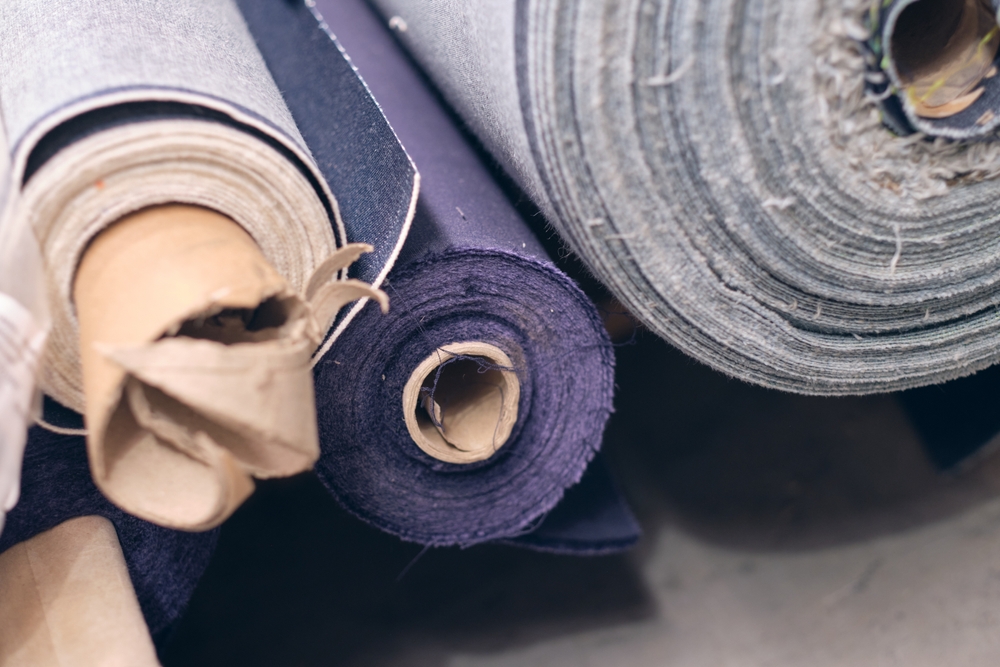
Fabric is usually the largest line item on an apparel manufacturer’s cost sheet, yet many factories still track it the way they did twenty years ago. Fabric roll tracking software replaces that guesswork with a live, roll-by-roll record of every yard on the shelf.
The usual alternative is a sticky note on a roll, a spreadsheet nobody updates after Friday, or a generic warehouse system that counts cartons perfectly well and has no idea what a dye lot is. All three break down for the same reason: none were built to track raw material at the level of detail cut-and-sew manufacturing demands.
We take a different approach. Our apparel inventory management software records each roll as its own unit, with its own number, width, dye lot, and actual received yardage, inside the same platform that runs purchasing, costing, production, and product development. Nothing gets re-keyed between systems because there is only one system.
PolyPM has been refined for apparel manufacturers over more than two decades, and PolyNest, our pattern design and marker making product, has been apparel-native since 1986. Neither one needs add-on modules or a consultant to teach it what a dye lot is.
→ Are you making cutting decisions based on a fabric count you cannot actually trust? Talk to the PolyPM team about fabric roll tracking software built specifically for apparel manufacturers.
Why Roll-Level Fabric Visibility Decides Your Margin
Fabric represents a large share of total product cost in cut-and-sew manufacturing, often more than labor and trims combined. When a manufacturer cannot see how much fabric is on hand, in what color, width, and condition, every downstream decision becomes a guess.
Cutting plans get built around estimates. Purchasing orders more fabric than needed to stay safe, tying up cash in stock that sits unused. Production schedules stall because a roll that was supposedly available turns out to be short.
Roll-level visibility fixes that. Instead of treating fabric as a general category of stock, fabric roll tracking software records each roll with its own attributes, so planners cut against what is actually available rather than what the spreadsheet says should be there.
This matters more as order volumes grow. A manufacturer running a handful of styles in one fabric can get away with rough estimates. A manufacturer running dozens of active styles across multiple fabric types, colorways, and seasons cannot, and planners end up spending hours reconciling numbers that should have been accurate from the start.
The Cost of Losing Visibility Into Raw Materials
Manufacturers relying on manual counts or generic inventory spreadsheets tend to hit the same problems on repeat.
Shortages appear mid-cut, forcing production to stop while someone tracks down more fabric or a substitute. Overordering becomes the default protection against those shortages, which quietly raises carrying costs and fills warehouse space with stock nobody has a plan for. Fabric defects go unnoticed until a roll is already on the cutting table, wasting labor as well as material. Physical inventory becomes a two-day event because the system of record is a shared file with six versions.
None of this comes from a lack of effort on the floor. It comes from a system never designed to track raw materials the way apparel inventory accuracy actually requires.
→ Are shortages and overordering eating into your margins every season? Talk to the PolyPM team about fabric roll tracking software built specifically for apparel manufacturers.
What Fabric Roll Tracking Software Should Track, and What PolyPM Records
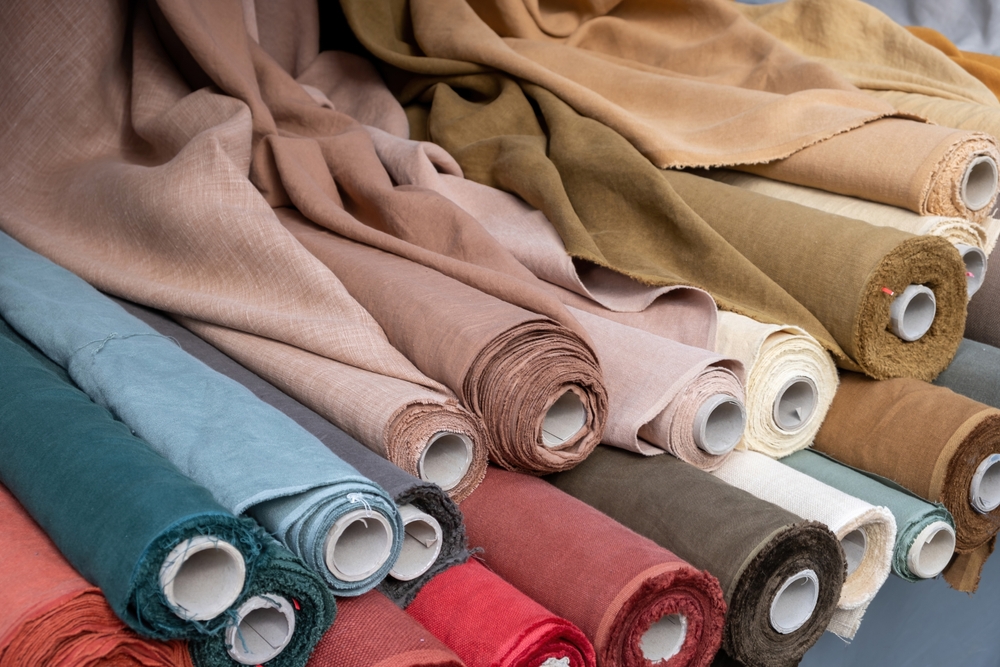
Not every inventory system is built for fabric. Generic warehouse software counts boxes and pallets, while a single apparel style might use ten fabric types across multiple colorways, each with its own shrinkage, width, and dye lot. The system has to capture that without slowing down receiving or cutting.
Details That Matter in Fabric Roll Tracking Software
At minimum, fabric roll tracking software should record roll number, fabric type, color, dye lot, width, and actual yardage received for every roll entering the warehouse, plus its physical location inside the facility, so cutters are not walking shelves to find what they need. PolyPM captures all of it on a single roll record.
Dye lot tracking deserves particular attention. Two rolls of the same fabric and color from different lots can still show a visible shade difference once garments are assembled, and manufacturers who cut across lots without tracking them risk shade complaints, chargebacks, or rejected shipments. PolyPM flags lot differences before cutting begins rather than after the garments are sewn.
Width and actual yardage matter as much as color. Mills rarely deliver exactly what was ordered. A roll marked for 60 yards might arrive with 58.5, and fabric ordered at 58 inches wide might measure narrower once it reaches the warehouse. Recording what actually arrived is what lets marker makers and planners build cutting plans that hold up.
Fabric Utilization and Waste
Beyond receiving and storage, roll data has to connect to how much fabric is actually consumed during cutting. PolyPM tracks planned yardage against actual yardage used on every cutting ticket, surfacing patterns that are easy to miss otherwise, such as a marker that runs over its planned consumption or a fabric that shrinks more than expected during pretreatment.
This is where many manufacturers see the biggest financial impact. A one or two percent improvement in fabric utilization across a season can represent a meaningful dollar amount when fabric is the largest cost on the sheet.
→ Do you know exactly how much fabric was consumed versus planned on your last production run? Talk to the PolyPM team about software built specifically for apparel manufacturers.
How PolyPM Fabric Roll Tracking Software Solves It
We built fabric roll tracking software features into the core of PolyPM rather than bolting it onto a general inventory module. Here is how a roll moves through the system.
Receive the roll as an individual unit. Staff scan or enter each roll against the purchase order, capturing roll number, fabric type, color, dye lot, width, and actual yardage received. Variances against the ordered quantity get recorded at that moment, not discovered three weeks later.
Assign it a location. Every roll gets a recorded storage position, so pulling fabric for a cutting order means walking to a shelf, not searching the warehouse.
Check it against real demand. When a style’s Bill of Materials specifies fabric requirements, PolyPM compares them against actual roll-level stock, so Material Requirements Planning runs on real yardage instead of an estimated total.
Allocate rolls to cutting orders. Planners reserve specific rolls against specific cut tickets, keeping dye lots together and stopping two orders claiming the same roll.
Record actual consumption. As rolls are cut, moved, or partially consumed, balances update immediately, and remnants stay visible as usable stock instead of disappearing into a corner of the warehouse.
Feed the result back into costing. Actual consumption posts against the style, giving costing teams a real number to compare against the plan.
Each step removes a place where information used to be re-entered, estimated, or lost. That is the practical difference between fabric data living in one platform and fabric data living in four.
→ Is your team re-entering the same fabric numbers into three different systems? Talk to the PolyPM team about fabric roll tracking software built specifically for apparel manufacturers.
How PolyPM Ties Fabric Data to Costing Accuracy
Accurate costing depends on accurate fabric data. Apparel costing starts with an estimated consumption per unit, built from the marker and the Bill of Materials, and that estimate only holds up if the fabric received and consumed matches the plan.
Because fabric roll tracking software inside PolyPM records real received yardage, real width, and real consumption against every cutting order, costing teams can compare planned cost against actual cost style by style. Over a season, that comparison often reveals styles that looked profitable on paper but were quietly losing margin to fabric waste, shrinkage, or rolls that came in short from the mill.
The same data strengthens supplier negotiations. A manufacturer who can show, roll by roll, that a mill keeps delivering under the ordered yardage brings documented evidence to that conversation instead of a general impression. It also feeds the broader apparel costing and order management picture, where fabric variance often separates a profitable program from a break-even one.
→ Do you know which styles are losing margin to fabric shrinkage or short rolls from your suppliers? Talk to the PolyPM team about fabric roll tracking software built specifically for apparel manufacturers.
From Pattern to Cutting Room: How PolyNest Extends Fabric Visibility
Fabric tracking does not end at the warehouse door. Marker making and cutting determine how efficiently that tracked fabric gets used, which is why our ecosystem includes PolyNest pattern design software alongside the core ERP and PLM platform.
PolyNest handles pattern design, grading, and marker making, with a focus on marker efficiency and fabric utilization. When roll widths and actual yardage are recorded accurately in PolyPM, that data informs marker planning in PolyNest, helping technical designers build layouts around the fabric genuinely available rather than an idealized width.
The connection runs the other way too. Once a marker is cut, actual consumption is compared against the planned consumption from PolyNest, giving a clear picture of utilization on every order and identifying which markers, fabrics, or cutting practices consistently produce more waste. Manufacturers evaluating apparel and textile pattern design software often underestimate how much of the value sits in this feedback loop instead of the drafting tools themselves.
→ Could better marker planning reduce the fabric waste happening on your cutting room floor? Talk to the PolyPM team about fabric roll tracking software built specifically for apparel manufacturers.

How PolyPM Keeps Multiple Facilities on One Fabric Count
Many apparel manufacturers no longer operate out of a single building. Product development might happen in one location while cutting and sewing take place across several factories, sometimes in different countries.
PolyPM is built for that. Rather than each location keeping its own fabric count, roll-level inventory lives in one system every facility can see and update, so a planner at head office can check availability at a factory in another country without picking up the phone.
That shared view also improves decisions when fabric needs to move. If one facility is short a roll and another has excess, the imbalance is visible immediately, so fabric gets reallocated instead of reordered. Manufacturers running apparel production across multiple sites usually find this is where manual reconciliation disappears fastest.
→ Do your teams have real-time visibility into fabric inventory across every facility you operate? Talk to the PolyPM team about fabric roll tracking software built specifically for apparel manufacturers.
Getting Fabric Into PolyPM Without Slowing Down Receiving
One concern manufacturers raise before adopting fabric roll tracking software is whether it will slow down an already busy receiving dock. In practice the opposite happens, because the minutes spent entering roll data at receiving replace hours otherwise spent searching, recounting, and correcting errors downstream.
PolyPM supports barcode labeling at receiving, so each roll gets a unique identifier as soon as it enters the building. Staff scan that label to log the roll along with its fabric type, color, dye lot, width, and yardage, and from that point the roll is tracked by scan rather than by memory. When it is pulled for a cutting order, relocated, or partially consumed, the system updates automatically instead of waiting for someone to fix a spreadsheet at shift end.
This connects the physical movement of fabric on the floor to the data purchasing, planning, and costing teams depend on, as part of our wider apparel production software capabilities. For manufacturers running multiple shifts or docks, that consistency removes the variation that creeps in when different people track fabric in different ways.
The time saved usually shows up everywhere except receiving. Cutters stop hunting for rolls, planners stop double-checking counts before releasing a cut ticket, and purchasing stops calling around to confirm stock. Scanning a roll in correctly pays that time back across the life of the fabric.
→ Would your receiving and cutting teams save time with barcode-based fabric tracking? Talk to the PolyPM team about fabric roll tracking software built specifically for apparel manufacturers.
What Makes PolyPM Different For Fabric Roll Tracking Software?
Most systems manufacturers evaluate fall into one of two camps. Generic ERP platforms such as NetSuite, Acumatica, Microsoft Dynamics GP, Odoo, or Oracle Cloud ERP handle finance and distribution well, then need customization before they can hold a dye lot or a roll width. Standalone inventory tools track fabric reasonably but sit outside purchasing, costing, and product development, so somebody has to move data between them.
We built PolyPM natively for apparel. Roll-level inventory, dye lots, actual received yardage, bundle tracking, cut planning, and apparel costing are part of the base product rather than the outcome of an implementation project. Product development data flows straight from our fashion apparel PLM software into manufacturing without duplicate entry, which is what makes the fabric picture stay accurate once production is running.
That difference shows up during evaluation, when manufacturers start asking which ERP actually has the features apparel efficiency depends on instead of comparing feature counts on a grid.
→ Are you being quoted customization hours just to make a generic ERP understand dye lots? Talk to the PolyPM team about fabric roll tracking software built specifically for apparel manufacturers.
Choosing the Right Fabric Roll Tracking Software
Manufacturers evaluating options should look past basic counting and focus on how well the system connects to the rest of production. A few questions are worth putting to every vendor.
Does it track fabric at the individual roll level, including dye lot, width, and actual received yardage? Does it connect fabric inventory directly to purchasing and Material Requirements Planning? Does it give shop floor and warehouse staff live visibility into roll location? Can it support multiple facilities with one shared view? And does it connect consumption data back to marker efficiency, so utilization can be measured and improved?
Implementation approach matters too. Manufacturers switching from spreadsheets worry about disruption during an active season. PolyPM lets rolls be added as they arrive, without requiring the whole warehouse to be recounted on day one, and training goes faster than expected because the software mirrors how fabric actually moves through the building.
Cost of ownership is worth weighing against the cost of carrying on without dedicated tracking. Licensing and implementation carry a real number, but it is usually small next to preventing a handful of shortages, avoiding one shade complaint from a major customer, or recovering a point of utilization across a year. Manufacturers comparing textile production software cost should ask vendors for concrete efficiency examples instead of general claims about visibility.
→ Is your current inventory system built for general warehousing rather than fabric rolls and dye lots? Talk to the PolyPM team about fabric roll tracking software built specifically for apparel manufacturers.
Industries We Serve With Fabric Roll Tracking Software
Roll-level tracking matters everywhere fabric is cut, but the reasons shift by category.
Apparel manufacturers and garment manufacturers come to us for the basics done properly: accurate yardage, dye lot discipline, and a cutting plan built on real stock. Textile manufacturers and mills need the same detail further upstream, where roll attributes are the product itself and the system has to handle greige as well as finished goods.
Workwear manufacturers and safetywear manufacturers carry an additional burden. A flame-resistant garment program requires proof that every roll used meets the required certification and that batches were not mixed in ways that compromise compliance documentation. Roll-level records make that proof a report rather than an archaeology project, which is a recurring theme in workwear production generally.
Uniform manufacturers face the color consistency version of the same problem. A school district reordering a year later expects the same navy and the same hand, and dye lot tracking at roll level is what makes that repeatable at scale. Our uniform manufacturing software applies the same fabric discipline to repeat orders that new development gets. Fashion manufacturers run short seasons with constant fabric turnover, where stale counts do damage fastest.
→ Does your team need tighter fabric compliance or color consistency tracking? Talk to the PolyPM team about fabric roll tracking software built specifically for apparel manufacturers.
Locations PolyPM Serves
We work with apparel manufacturers across the United States, Canada, and Latin America, including operations that cut in one country and sew in another. Discovery calls, demos, and support are available in English and Spanish, which matters when the warehouse and cutting room staff using the system daily are in Guatemala, Honduras, or Mexico while head office sits in Los Angeles, New York, or Miami.
PolyPM is headquartered in Baltimore, Maryland, and supports manufacturers running multi-country supply chains from one shared inventory record. If you operate across borders, fabric visibility should not stop at one of them.
Other PolyPM Services
Fabric roll tracking software is one part of what we do. The rest of the platform covers the workflows around it.
Our apparel manufacturing ERP software handles purchasing, MRP, costing, shipping, vendor management, and financials. Fashion apparel PLM covers style management, line planning, Bills of Materials, tech packs, colorways, measurements, lab dips, and samples, with that data flowing straight into production. Apparel inventory and materials management extends roll-level tracking across trims, finished goods, and work in progress.
Apparel production and order management covers scheduling, bundle tracking, cut planning, shop floor visibility, subcontractors, and decoration work including screen printing, embroidery, and sublimation. PolyNest pattern design handles pattern creation, grading, marker making, cutter and plotter integration, and DXF import. Manufacturers who want the full picture usually start with how apparel management software ties these pieces together.
→ Would one platform across product development, inventory, and production replace three systems you are paying for now? Talk to the PolyPM team about fabric roll tracking software built specifically for apparel manufacturers.

Bringing Fabric Under Control With PolyPM
Fabric roll tracking software gives apparel manufacturers something a spreadsheet never can: a live, accurate picture of the raw material driving the business. From receiving through cutting, that visibility reduces shortages, controls overordering, protects against shade variation, and connects to how efficiently fabric gets used.
PolyPM keeps that tracking in the same platform that runs purchasing, production, costing, and product development, while PolyNest carries it into marker making and utilization. For manufacturers still working from manual counts, integrated roll-level tracking is one of the most direct ways to protect margin on the largest cost in the business.
→ Ready to see what roll-by-roll fabric visibility looks like in your operation? Talk to the PolyPM team about software built specifically for apparel manufacturers.
→ Follow PolyPM on LinkedIn for practical apparel manufacturing insights, product updates, and new articles as we publish them.
PolyPM and Fabric Roll Tracking Software: FAQs
What is fabric roll tracking software, and how does PolyPM handle it?
It records fabric inventory at the roll level instead of as a general stock category. PolyPM captures roll number, dye lot, color, width, actual received yardage, and warehouse location for every roll, then keeps that record connected to purchasing, cutting, and costing inside the same platform.
How does PolyPM track dye lots at the roll level?
Every roll received into PolyPM carries its own dye lot reference. When planners allocate rolls to a cutting order, the system shows which lots are involved, so they can be kept together instead of surfacing as a shade difference after garments are sewn.
How does PolyPM help reduce fabric waste on the cutting table?
PolyPM records actual yardage consumed against the planned consumption from each marker. Comparing the two across a season identifies the markers, fabrics, and cutting practices that consistently run over, so corrections happen before the next production run.
Can PolyPM track fabric across multiple manufacturing facilities?
Yes. Roll-level inventory in PolyPM lives in one shared record every facility can see and update, so a planner can check availability at another site without calling, and fabric can be reallocated between locations instead of reordered.
How does PolyPM connect fabric inventory to purchasing decisions?
PolyPM checks Bill of Materials requirements against actual roll-level stock rather than an estimated total, so Material Requirements Planning and purchasing work from real yardage. That prevents both the shortages that stop a cut and the overordering used to guard against them.
Is PolyPM a good fit for uniform and workwear manufacturers?
It is a strong fit for both. Uniform programs depend on color consistency across repeat orders, and workwear and safetywear programs often need documentation proving which certified rolls went into which garments. PolyPM supports both through roll-level dye lot and material records.
Does PolyPM replace the need for pattern and marker making software?
No, and it is not meant to. PolyPM handles roll-level inventory, purchasing, production, and costing, while PolyNest handles pattern design, grading, and marker making. They work together so fabric availability informs marker planning and actual consumption flows back into costing.
How is PolyPM different from general warehouse inventory software?
General warehouse systems count units like boxes or pallets. PolyPM is built around the attributes that decide outcomes in apparel manufacturing, including dye lots, roll widths, actual received yardage, and consumption measured against markers, with all of it connected to the rest of the manufacturing process.