
Every apparel manufacturer knows the feeling of watching a ship date get closer while a critical style still sits half finished on the cutting table. Garment production scheduling software exists to prevent that exact scenario.
It gives production planners, plant managers, and operations teams a single, accurate view of what needs to happen, when it needs to happen, and whether the plant actually has the capacity to make it happen. Without that visibility, even well run factories fall into a pattern of reactive firefighting instead of proactive planning.
This article looks at why garment production scheduling breaks down when it relies on spreadsheets and manual tracking, what a modern scheduling process actually requires, and how PolyPM’s integrated apparel ERP and production software helps manufacturers keep orders moving through cutting, sewing, finishing, and shipping without last minute surprises.
Why Garment Production Scheduling Is So Difficult
Garment manufacturing is not a linear process. A single order might involve multiple fabric shipments arriving on different dates, trims sourced from several vendors, subcontracted operations like embroidery or screen printing, and a sewing line that is also running two other styles at the same time. Scheduling has to account for all of it at once.
Most factories that still rely on spreadsheets or standalone planning tools run into the same recurring problems.
Fragmented Information Across Departments
Purchasing knows when fabric is arriving. The cutting room knows how much fabric is on hand. The sewing floor knows how many operators are available this week. Rarely does one person or one system see all three at the same time.
When information lives in separate spreadsheets, planners are forced to manually reconcile data that changes daily, and mistakes creep in.
Capacity Planning Based on Guesswork
Many plants schedule production based on rough estimates of line capacity rather than actual historical throughput. This leads to overloaded lines during peak periods and idle machines during slow weeks, both of which hurt margins and delivery performance.
Limited Visibility Into Work in Progress
Once a bundle leaves the cutting room, many manufacturers lose real time visibility into where it is in the process. Is it at the sewing line, at decoration, or waiting on a subcontractor? Without accurate WIP tracking, planners cannot make informed decisions about reprioritizing work when problems arise.
Reactive Rather Than Proactive Planning
When scheduling is manual, problems are usually discovered after they have already caused delays. A missing trim shipment or a machine breakdown only becomes visible once it starts affecting the line, at which point the plant is already behind.
Garment production scheduling software addresses each of these issues by connecting purchasing, inventory, cutting, sewing, and shipping data into a single planning environment.
PolyPM’s apparel manufacturing ERP software was built around this reality, giving planners one system that reflects what is actually happening on the floor rather than what a spreadsheet assumed would happen.
→ Are missed ship dates becoming a regular occurrence at your plant Talk to the PolyPM team about connecting your production data into one accurate schedule.
What Effective Garment Production Scheduling Actually Requires
Before evaluating garment production scheduling software, it helps to understand what a strong scheduling process looks like in practice. It is not simply about creating a calendar of due dates. It requires coordination across several operational layers.
Accurate Material Requirements Planning
A production schedule is only as reliable as the materials behind it. Material Requirements Planning, commonly called MRP, calculates exactly what fabric, trims, and components are needed for each order, when they need to arrive, and whether current inventory can support the plan.
Without MRP built into the scheduling process, planners are scheduling work that materials may not actually support.
Realistic Capacity Planning
Capacity planning has to reflect actual line performance, not theoretical output. That means accounting for the number of operators assigned to a line, the operation breakdown for each style, and historical efficiency rates. Garment production scheduling software that pulls from real production history produces far more realistic timelines than manual estimates.
Cut Planning and Marker Efficiency
Cutting is often the first bottleneck in the production process. Scheduling needs to account for how long it takes to lay, mark, and cut fabric for each style, and how efficiently that fabric is being used.
This is where pattern design and marker making become part of the scheduling conversation, since fabric utilization directly affects both cost and cutting room throughput.
PolyNest’s pattern design software helps manufacturers optimize markers before cutting even begins, which keeps the schedule moving and reduces fabric waste at the same time.
Bundle Tracking Through Every Operation
Once fabric is cut, bundles need to be tracked through every operation in the sewing process, including any subcontracted steps like embroidery, screen printing, or sublimation. Scheduling software should show planners exactly where each bundle sits at any given moment.
Shop Floor Visibility in Real Time
Planners need to see production status without walking the floor or calling supervisors for updates. Real time shop floor visibility allows scheduling adjustments to happen the moment a delay occurs rather than days later.
Order Level Traceability
Every order needs to be traceable from raw material receipt through shipment. When a customer asks for a status update, the answer should be immediate, not something that requires checking with three different departments.
How Garment Production Scheduling Software Connects These Pieces
Garment production scheduling software brings these elements together so planners are working from one accurate source of information instead of piecing together updates from different teams.
PolyPM’s apparel production software was designed specifically around this coordination, giving manufacturers a single system that manages production planning, scheduling, bundle tracking, cut planning, work in progress, and subcontractor management together.
Production Planning Built on Real Data
Rather than starting from a blank calendar, planners in PolyPM build schedules using live order data, current inventory positions, and actual line capacity. This means a schedule reflects reality from the moment it is created, not an optimistic guess that has to be revised a week later.
Integrated MRP for Material Availability
Because PolyPM combines ERP and PLM functionality in one platform, material requirements are calculated directly from bills of materials and current purchase orders.
Planners can see immediately whether a style is fully covered by materials on hand or whether a delayed shipment will push the schedule. This removes the guesswork that causes so many missed dates in garment manufacturing.
WIP and Bundle Tracking on the Shop Floor
PolyPM tracks bundles as they move through cutting, sewing, and finishing, giving planners a live picture of work in progress. If a bundle is sitting longer than expected at a particular operation, that becomes visible immediately rather than after the ship date has already passed.
Subcontractor Coordination Without Losing Visibility
Many garment manufacturers rely on subcontractors for specialized operations. PolyPM keeps subcontracted work inside the same scheduling and tracking system, so planners do not lose visibility just because a bundle left the building for decoration or a specialty finish.
Production Scheduling Connected to Inventory
Because inventory and production planning live in the same system, planners can see roll level fabric availability alongside the production schedule. This connection between the apparel inventory management software and the production module means fewer surprises when it is time to cut.
→ Do you want a clearer picture of where every order sits on your production floor at any moment? Reach out to the PolyPM team to see how integrated scheduling and WIP tracking works in practice.

The Cost of Poor Production Scheduling
It is worth being direct about what happens when garment production scheduling is left to spreadsheets and manual coordination.
Missed ship dates damage customer relationships and can trigger chargebacks from retail partners with strict delivery windows. Overtime costs climb when planners discover a bottleneck too late and have to push a line to catch up.
Fabric gets wasted when cutting decisions are made without accurate marker efficiency data. Idle labor happens when a line runs out of work because materials were not staged in time. Customer service teams spend hours chasing down order status instead of focusing on account growth.
Each of these problems traces back to the same root cause, which is a lack of connected, real time information across purchasing, inventory, cutting, and production. Garment production scheduling software solves this by giving every department the same accurate picture of the plan.
Why Apparel Specific Scheduling Software Matters
Generic ERP and scheduling platforms are usually built for discrete manufacturing, where a product is assembled from a fixed set of parts in a repeatable sequence. Garment manufacturing does not work that way.
A single style can have multiple colorways, sizes, and fabric variations, and the production sequence often changes based on decoration requirements, subcontracting, or seasonal demand.
This is why apparel manufacturers frequently struggle to adapt generic ERP systems to their scheduling needs. Fields have to be customized, workflows have to be forced into structures that were never designed for cut and sew production, and reports rarely reflect how a garment factory actually operates.
PolyPM was built from the ground up for apparel, garment, and textile manufacturing. Roll level fabric tracking, bundle tracking, colorway management, and marker efficiency are native parts of the system rather than workarounds. This apparel specific design is what allows scheduling to reflect the true complexity of garment production instead of forcing that complexity into a generic framework.
→ Are you currently trying to make a generic ERP system work for garment scheduling? Contact PolyPM to see what purpose built apparel software looks like in comparison.
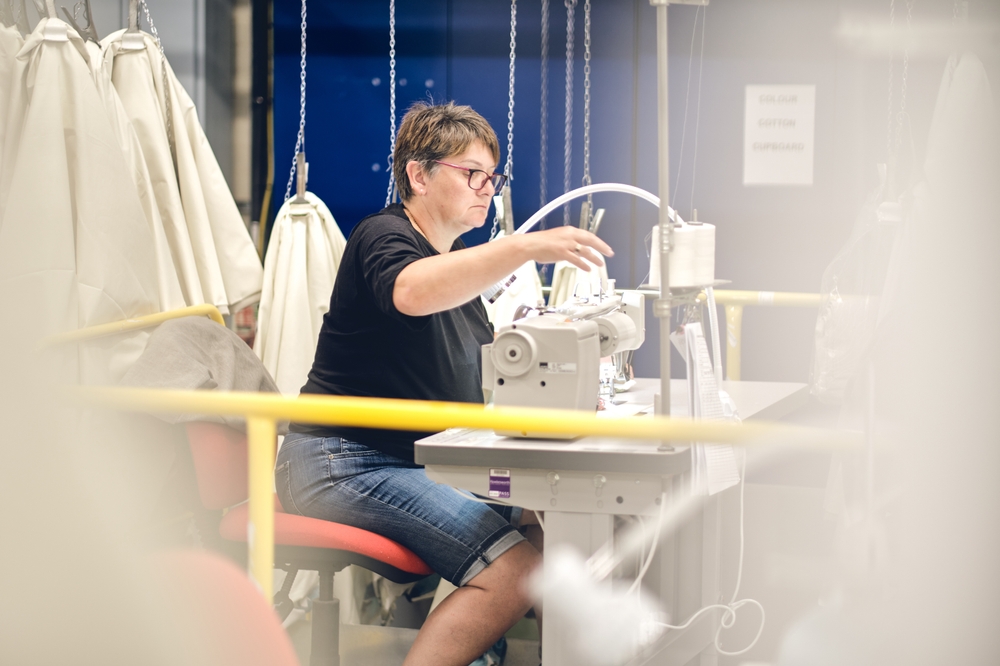
Garment Production Scheduling Across Different Manufacturing Segments
Scheduling challenges look slightly different depending on what a manufacturer produces, but the underlying need for accurate, connected planning stays consistent.
Uniform and Workwear Manufacturing
Uniform and workwear producers often manage large volume orders with tight compliance requirements and multiple sizing configurations. Scheduling has to account for size run complexity while still protecting delivery dates for institutional and corporate clients. PolyPM’s experience supporting workwear ERP and uniform ERP needs reflects this reality.
Safetywear Manufacturing
Safetywear manufacturers face similar scheduling pressures, with the added need to track certifications and specific material requirements through the production process. Purpose built safetywear ERP functionality keeps compliance data connected to the production schedule rather than managed separately.
Fashion and Seasonal Apparel
Fashion manufacturers deal with shorter production windows and frequent style changes, which makes accurate cut planning and marker efficiency especially important for protecting margins. Scheduling software built around fashion ERP software helps these manufacturers move quickly without losing control of the plan.
Garment and Textile Manufacturing Generally
Across garment and textile manufacturing broadly, the same principles apply. Scheduling needs to reflect real capacity, real material availability, and real time production status. PolyPM’s work supporting garment manufacturing ERP and textile industry ERP needs is built around these shared requirements, regardless of the specific product category.
Key Features to Look for in Garment Production Scheduling Software
When evaluating garment production scheduling software, manufacturers should look for a specific set of capabilities rather than a generic project management tool relabeled for manufacturing.
Live capacity visibility. The system should show current line loading based on actual assigned work, not theoretical capacity.
Integrated MRP. Material requirements should calculate automatically from bills of materials and current inventory, not require a separate spreadsheet exercise.
Bundle and WIP tracking. Planners need to see exactly where work sits at any point in the process, including at subcontractors.
Cut planning tools. Marker efficiency and fabric utilization should feed directly into cutting room scheduling.
Order level traceability. Every order should be traceable from raw materials to shipment without manual lookups across systems.
Reporting built for apparel. Reports should reflect apparel specific metrics like fabric utilization, bundle throughput, and style level efficiency rather than generic manufacturing KPIs.
Scalability across facilities. For manufacturers running multiple plants or working with subcontractors internationally, scheduling software needs to provide consistent visibility across every location.
→ Do your current planning tools give you real time visibility into cutting, sewing, and finishing all in one place? Get in touch with PolyPM to see how a purpose built system compares to what you are using today.
How PolyPM Supports the Full Production Cycle
Garment production scheduling does not happen in isolation. It connects directly to product development, purchasing, inventory, and shipping. PolyPM’s platform reflects that connection.
On the product development side, PolyPM’s fashion apparel PLM software manages tech packs, bills of materials, and specifications, so the exact data used to plan a garment’s construction flows directly into the production schedule without duplicate entry. When a bill of materials changes during development, that update carries through to material requirements planning automatically.
On the pattern and cutting side, PolyNest’s pattern design software optimizes markers for fabric efficiency before cutting begins, which directly affects how long the cutting room needs and how much fabric a given order will consume.
On the inventory side, roll level tracking inside PolyPM’s inventory management software gives planners an accurate picture of available fabric before committing to a production date.
On the production side, PolyPM’s apparel production software manages the actual scheduling, bundle tracking, and shop floor visibility that keeps orders moving.
This connected structure is the core difference between apparel specific software and a collection of disconnected tools. When product development, inventory, and production all draw from the same data, garment production scheduling becomes far more accurate and far less dependent on manual updates.
Comparing Garment Production Scheduling Approaches
The table below offers an objective look at how different scheduling approaches compare for apparel manufacturers.
| Approach | Apparel Specific Design | Real Time WIP Visibility | Integrated MRP | Bundle Tracking | Best Suited For |
| PolyPM (Apparel ERP and Production Software) | Built specifically for apparel and garment manufacturing | Yes, tracked through cutting, sewing, and finishing | Yes, connected to bills of materials and inventory | Yes, including subcontracted operations | Apparel, garment, textile, uniform, workwear, and safetywear manufacturers seeking one connected system |
| Generic Manufacturing ERP Platforms | Adapted from discrete manufacturing, often requires customization | Varies by implementation, typically limited for apparel workflows | Often present but not apparel specific | Usually requires custom configuration | Manufacturers with simpler, non apparel production sequences |
| Spreadsheet Based Planning | Not apparel specific, fully manual | Manual updates only | Manual calculation | Manual tracking, prone to errors | Very small operations with limited order volume |
| Standalone Scheduling Tools | Not apparel specific | Limited, often disconnected from inventory | Rarely integrated | Rarely included | Manufacturers using scheduling as one piece of a broader disconnected system |
This comparison is meant to illustrate why apparel manufacturers increasingly move toward purpose built systems as order volume and complexity grow. Each approach can work for certain operations, but the level of visibility and accuracy tends to scale with how closely the software matches the realities of garment manufacturing.
Getting Started With Garment Production Scheduling Software
Manufacturers considering a move to dedicated scheduling software often start by mapping their current process end to end, from order intake through shipment, to identify where visibility breaks down. Common starting points include a plant that consistently misses ship dates, a cutting room that struggles with fabric shortages, or a planning team spending most of its week reconciling spreadsheets instead of actually planning.
From there, the evaluation process should focus on whether a system can genuinely reflect apparel specific workflows, including size and colorway complexity, roll level fabric tracking, and bundle level production tracking. A short pilot on a single product line or facility is often the most effective way to confirm that a system fits before a full rollout.
PolyPM’s team works directly with manufacturers during this evaluation process, helping plants understand exactly how scheduling, inventory, and production data will connect once implemented.
→ Is your team ready to move away from manual scheduling and toward a connected production system? Speak with PolyPM about what implementation would look like for your operation.
Conclusion
Garment production scheduling only works when it reflects what is actually happening across purchasing, inventory, cutting, and the sewing floor. Spreadsheets and disconnected tools cannot keep up with the complexity of modern apparel manufacturing, which is why more manufacturers are moving toward apparel specific scheduling software that connects every stage of production.
PolyPM brings production planning, MRP, bundle tracking, cut planning, and shop floor visibility into one system built specifically for apparel, garment, and textile manufacturers. The result is a schedule that planners can actually trust, and orders that are far more likely to ship on time.
If your plant is ready to replace manual scheduling with a connected, apparel specific system, the PolyPM team is ready to help.
Garment Production Scheduling Software: FAQs
What is garment production scheduling software?
Garment production scheduling software is a system that helps apparel manufacturers plan, track, and manage production across cutting, sewing, finishing, and shipping. It combines order data, material availability, and line capacity to create realistic production timelines.
How is garment production scheduling different from general manufacturing scheduling?
Garment production involves variables like size runs, colorways, roll level fabric tracking, and bundle tracking that generic manufacturing scheduling tools were not built to handle. Apparel specific software accounts for these factors natively.
Can garment production scheduling software help reduce missed ship dates?
Yes. By giving planners real time visibility into material availability, line capacity, and work in progress, scheduling software allows problems to be identified and addressed before they affect delivery timelines.
Does garment production scheduling software work with subcontractors?
PolyPM tracks subcontracted operations like embroidery, screen printing, and sublimation within the same scheduling and WIP tracking system, so visibility does not disappear once work leaves the building.
How does material requirements planning connect to production scheduling?
MRP calculates what materials are needed and when, based on bills of materials and current orders. When MRP is integrated with scheduling, planners can confirm that materials will be available before committing to a production date.
What role does pattern design play in production scheduling?
Marker efficiency and fabric utilization, managed through pattern design software like PolyNest, directly affect how much time cutting requires and how much fabric an order consumes, which in turn affects the overall schedule.
Is garment production scheduling software useful for uniform and workwear manufacturers?
Yes. Uniform and workwear manufacturers often manage complex size runs and large order volumes, both of which benefit significantly from accurate, apparel specific scheduling and capacity planning.
How long does it take to implement garment production scheduling software?
Implementation timelines vary based on the size of the operation and the number of facilities involved. Many manufacturers start with a pilot on a single line or product category before expanding system wide, which the PolyPM team can help plan.