
Most textile manufacturers know their inventory system is not perfect. Fabric rolls are tracked in one place, purchase orders live in another, and production planning pulls from a third. Someone reconciles them manually at the start of each week… or tries to. By the time a shortage surfaces, the cut plan is already committed and the reorder lead time is three weeks out. That is not an inventory problem. That is what happens when an ERP inventory software for textile manufacturing is treated as a reporting tool rather than an operational one and when inventory data and the systems that depend on it are never actually connected.
In 2026, the question is not whether textile manufacturers need better inventory visibility. It is whether the system managing that inventory is the same system driving purchasing decisions, production planning, and costing – or whether those functions are still being bridged manually every time something changes.
What Textile Inventory Looks Like When It Lives Outside the ERP
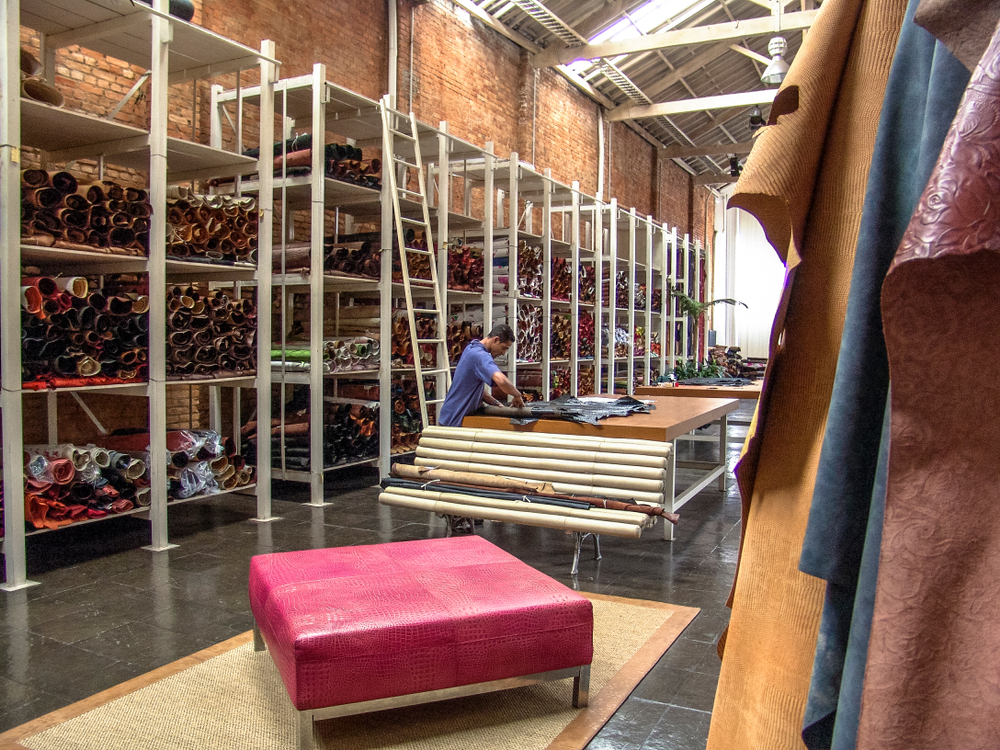
Textile inventory is not static. Fabric moves from receiving to storage to the cutting floor, changing state at every stage. Rolls get split. Yields vary by marker and lay plan. Dye lots need to stay matched across a production run. Greige fabric moves through finishing and becomes a different material entirely. None of this maps cleanly onto a generic inventory module designed for discrete, countable units.
When that inventory lives outside the ERP – in a standalone system, a warehouse platform, or a spreadsheet that gets updated when someone remembers – the gap between what the ERP thinks exists and what actually exists on the floor grows every day. Production planners schedule against inventory that has already been allocated. Purchasing reorders fabric that is sitting in a different location under a different lot number. Costing runs against theoretical yields that have not reflected actual production in months.
The common points of failure include:
- Fabric rolls received and logged in a warehouse system that the ERP cannot see until someone manually updates it
- Dye lot allocations managed outside the production order, creating shade mismatches that only surface when cutting starts
- Yield variances tracked informally rather than fed back into purchasing and planning
- Subcontractor-held materials invisible to the ERP until they return, creating phantom inventory that distorts available stock
- Purchase orders placed based on system quantities that do not reflect what is actually on the floor
Each of these is a gap between inventory reality and ERP reality. And in textile manufacturing, that gap has a direct cost.
What That Disconnection Actually Costs Across Purchasing, Production, and Costing
The cost of disconnected inventory does not show up in one line item. It distributes across the operation in ways that are easy to attribute to other causes (supplier delays, planning errors, floor inefficiency) when the root cause is the same in every case: the ERP is making decisions based on inventory data it cannot actually see.
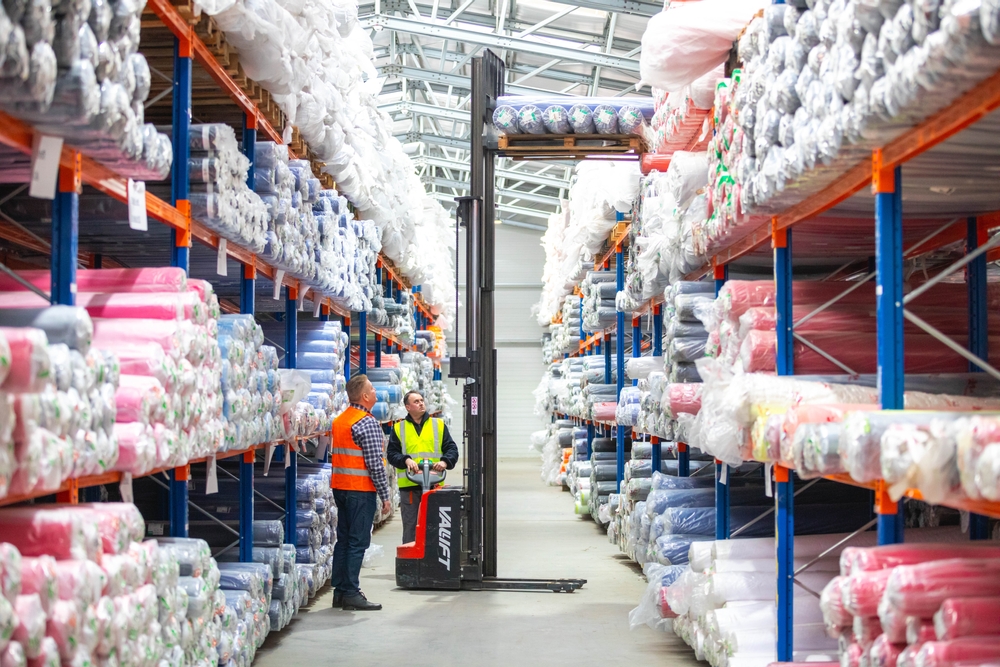
- Purchasing pays the most visible price. When inventory quantities in the ERP do not reflect actual stock on the floor, buyers either over-order – tying up working capital in fabric that is already there – or under-order, triggering emergency reorders at premium costs. In textile manufacturing, where lead times on specific constructions, weights, and dye lots can run four to eight weeks, a purchasing error made against bad inventory data does not get fixed quickly.
- Production planning absorbs the operational cost. Cut plans committed against inventory that turns out to be short, mismatched by dye lot, or already allocated to another order force replanning mid-run. That replanning cascades – sewing lines idle, subcontractor schedules slip, delivery dates compress. The floor does not stop because of a production failure. It stops because planning was working from a system that did not know what inventory was actually available.
- Costing carries the silent cost. When actual fabric yields, waste percentages, and roll-specific variances never feed back into the ERP, standard costs drift from reality. Margins look fine on paper until a season closes and the reconciliation reveals that every order consumed more material than costing assumed. By then, the pricing decisions that eroded the margin are already in the market.
PolyPM: ERP Inventory Software for Textile Manufacturing Built on a Unified Database
PolyPM operates as a unified PLM + ERP system on a single centralized database, which is what makes it function as a real ERP inventory software for textile manufacturing rather than a layer sitting on top of production. Inventory is not a module that syncs with the ERP on a schedule. It is part of the same system that drives purchasing, production planning, costing, and order management.
For textile manufacturers, this means:
- Roll-level fabric tracking with dye lot, width, weight, yardage, and QC data connected directly to production orders
- Fabric reconciliation across markers, shrink tests, and actual yield, so purchasing and planning reflect what production is actually consuming
- Automated shortage alerts before cut plans are committed, not after cutting starts
- Subcontractor inventory visibility so materials held outside the facility are never invisible to planning
- Costing that updates against actual yield and usage rather than static BOM assumptions
- Real-time WIP tracking from cut through sew, embellish, finish, and ship
When a roll is received, allocated, or consumed, that change is immediately available to every authorized user across purchasing, planning, and production. There is no reconciliation step. There is no end-of-week update. The inventory the ERP sees is the inventory that exists.
A Friendly Comparison: What to Look For When Evaluating ERP Inventory Software for Textile Manufacturing
Textile manufacturers evaluating ERP inventory platforms often compare general systems – Oracle, SAP, NetSuite, Acumatica, Dynamics and Odoo alongside apparel-tailored systems such as BlueCherry, ApparelMagic, and AIMS360.
General ERP platforms handle inventory as a module – stock quantities, purchase orders, and basic receiving. Where they fall short is textile-specific inventory logic: roll-level tracking, dye lot control, yield variance, and the connection between fabric inventory and active cut plans. These typically require customization that adds cost and creates fragility across every upgrade cycle.
Apparel-focused platforms improve on textile workflows but vary significantly in how tightly inventory is connected to production planning and costing inside the same system. The distinction worth pressing on is whether an inventory change (a yield variance, a dye lot mismatch, a subcontractor return ect) updates purchasing and planning automatically, or whether that update requires a manual step.
For a broader platform comparison, explore our full apparel ERP comparison for 2026.
Multi-Category Textile and Apparel Operations
Many textile manufacturers also produce across apparel, accessories, and finished goods categories alongside raw fabric and material operations. When each category runs against a different inventory system (or a different module within a platform that does not share data in real time), the disconnection problem multiplies across every program running simultaneously.
PolyPM supports multi-category textile and apparel manufacturing by running inventory, PLM, and ERP together on one platform. A fabric roll allocated to a uniform program cannot be accidentally committed to an accessories order. A yield variance on a swimwear cut plan feeds back into purchasing for that program, not the general ledger. Inventory stays accurate at the program level, not just in aggregate.
FAQ – ERP Inventory Software for Textile Manufacturing: PolyPM
What is an ERP inventory software for textile manufacturing? It is a platform that manages fabric, trim, WIP, and finished goods inventory as a connected part of the ERP, not as a separate system. A purpose-built platform keeps inventory data aligned with purchasing, production planning, and costing in real time, so operational decisions are always based on what inventory actually exists.
Why does it matter that inventory and ERP are in the same system? When they are separate, every inventory change requires a manual update to stay current across purchasing, planning, and costing. That lag creates the conditions for over-ordering, production stoppages, and costing differences. A unified system eliminates that update cycle entirely.
How does PolyPM handle roll-level fabric tracking? Every fabric roll in PolyPM is captured with yardage, width, weight, dye lot, vendor details, QC notes, and shrink test results. That data connects directly to cut plans, production orders, and purchasing – so allocation decisions reflect what is actually available at the roll level, not just in aggregate.
Does PolyPM provide visibility into subcontractor-held inventory? Yes. PolyPM tracks materials sent to subcontractors, what is currently held, what has been completed, and what remains – so subcontractor locations are never a blind spot in inventory planning.
Is PolyPM scalable for growing textile manufacturers? Yes. PolyPM supports operations from small teams to large multi-facility global manufacturers, expanding users, production capacity, and operational complexity without requiring a full system replacement or disruptive re-implementation.
Final Takeaway on ERP Inventory Software for Textile Manufacturing in 2026
The cost of inventory that lives outside the ERP is not a line item. It is the purchasing error that triggers a premium reorder, the cut plan that stalls because dye lots were never matched, and the margin that erodes because costing was running against yields that stopped reflecting reality two seasons ago. By the time any of it surfaces, the decisions that caused it are already made.
PolyPM is built on a unified ERP + PLM architecture from Polygon Software (founded in 1986) so that inventory, purchasing, production planning, and costing stay connected in real time – across every fabric roll, every production order, and every facility. If your textile manufacturing operation needs inventory that the ERP can actually see and act on, PolyPM is worth evaluating.
→ Follow PolyPM on LinkedIn and Facebook for even more insights on inventory management. You can also read verified client reviews on Capterra.