

Most PLM software holds product data well and moves it badly. A technical designer finalizes a tech pack, the colorway gets signed off, the bill of materials is locked, and then someone retypes all of it into whatever system actually runs the factory. That retyping is where apparel manufacturers quietly lose days.
Our apparel PLM software sits inside the same database as our ERP. A style approved in product development is the same style purchasing orders against, the same style the cut plan draws from, and the same style the shop floor reports progress on. There is no export, no sync job, and no second version of the truth.
We have been building for apparel manufacturers only since 1986, when PolyNest first shipped as a pattern design and marker making system. PolyPM has been refined for over two decades on the same principle: no add-on modules bolted onto a generic platform, and no consultant workarounds to make a finance system understand size scales.
Is your product development team rebuilding the same tech pack data in three different places? Talk to the PolyPM team about putting it in one.
Where Product Development Loses Time Before a Single Garment Is Cut
Ask a production manager where the schedule slipped and you rarely hear “the sewing was slow.” You hear that the fabric arrived short, the trim was the wrong color, or the fit sample came back needing a grade rule change that nobody pushed through to the pattern.
Those are product development problems showing up two weeks late, on the factory floor, where they cost the most to fix.
The tech pack stops being the source of truth
A tech pack starts clean. Then the buyer asks for a different zipper, the mill substitutes a fabric weight, and the fit session moves the armhole. Each change is real and each one gets recorded somewhere, but if the tech pack lives in a document and the factory works from a printed copy, the two drift apart within days.
Bills of materials go stale faster than anyone expects
Apparel bills of materials carry more moving parts than most manufacturing BOMs. Consumption varies by size. Trims vary by colorway. A single style in four colorways and six sizes can generate hundreds of material requirements, and every one of them feeds purchasing.
When the BOM is maintained outside the system that places purchase orders, shortages are discovered at the cutting table rather than at the planning stage. That is how a two dollar label holds up a four thousand piece order.
Costing is done once and never revisited
Most manufacturers cost a style at quote time, then move on. Fabric prices move, consumption changes after the marker is made, and subcontractor rates get renegotiated. Without live product lifecycle management data feeding the cost sheet, the margin you quoted and the margin you earned are different numbers, and you find out at month end.
None of this is a people problem. It is what happens when the information created in product development has no direct path into purchasing, cutting, sewing, and shipping.
Are late product development changes reaching your cutting room too slowly? Ask us how PolyPM keeps them in sync.
Why Generic PLM Software Breaks Down in Apparel Manufacturing
Plenty of PLM software was built for industries where a product has one configuration, one price, and one part number. Apparel does not work that way, and the gap shows up fast.
Size and color are not variants, they are the product
In most manufacturing systems, size and color get handled as product variants bolted on after the fact. In apparel, a style exists as a matrix. Sizes run across, colorways run down, and almost every number in the business lives inside that grid: order quantities, cut quantities, work in progress, finished goods, and invoices.
PLM software that treats the size and color matrix as an afterthought forces your team to flatten it into rows, and once flattened, it never reconciles cleanly against production.
Fabric is tracked by roll, not by quantity
Two hundred meters of the same fabric is not interchangeable. Rolls differ by dye lot, width, and shade band, and cutting across lots creates shading rejects nobody catches until final inspection. Systems built for discrete manufacturing have no concept of roll level fabric inventory, so manufacturers end up tracking it in a side spreadsheet.
Integration projects rarely close the gap
The standard answer is middleware. Connect the PLM to the ERP, map the fields, and schedule a sync. It works until someone adds a colorway, renames a trim, or changes a size scale. Then the mapping breaks, and the team goes back to manual checks.
We have watched manufacturers spend more on integration maintenance than they ever spent on licenses. That cost rarely appears in the original comparison when teams are weighing up ERP features for apparel efficiency.
Has an integration between your design system and your ERP broken one too many times? Let’s look at what a single apparel native platform would replace.
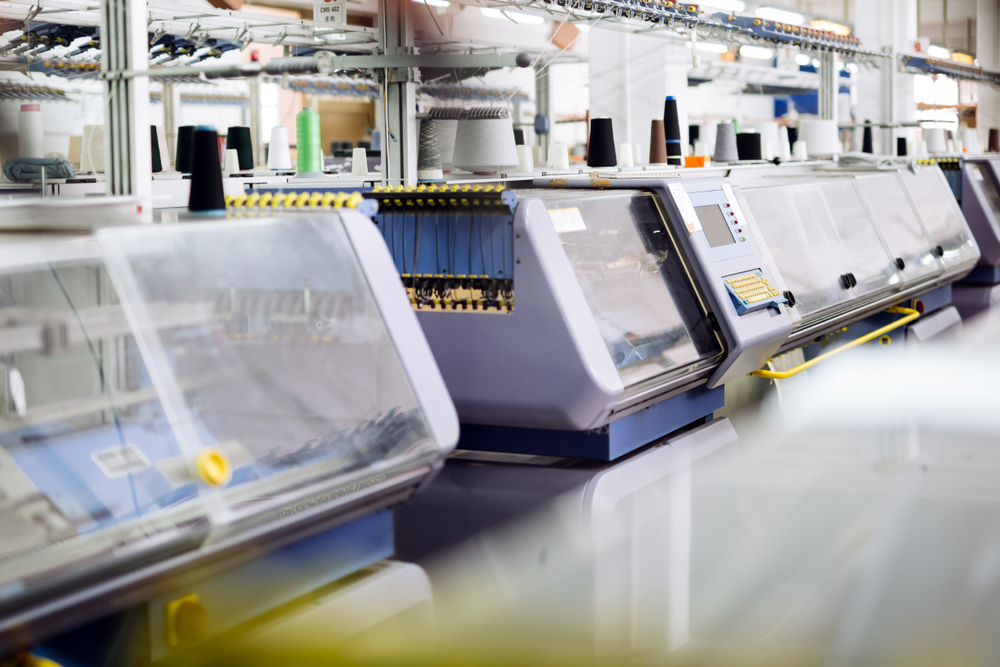
How PolyPM Solves It: PLM Software Sharing One Database With Your ERP
PolyPM is a single platform that carries both functions. The PLM software and the apparel manufacturing ERP are not two products with a connector between them. They are one system reading from one set of records, which is why a change made in development is visible in purchasing the moment it is saved.
Here is how a style moves through it.
- The style is created once. Season, category, customer, size scale, and colorways are entered at the style level. Every downstream document inherits from that record rather than copying it, so a size scale correction updates the orders, the cut plan, and the packing specification together.
- The bill of materials is built against the size and color matrix. Fabric, trim, labels, and packaging are entered with consumption per size where it matters and per colorway where it matters. Our PLM software calculates total requirements against the actual order quantities instead of an average.
- Tech packs, measurements, and artwork attach to the style. Construction details, points of measure, grade rules, lab dips, and print or embroidery artwork sit on the same record. Revisions are versioned, so the floor always sees the current issue rather than whichever printout is on the table.
- Costing runs continuously. The cost sheet draws from live material prices, current consumption, labor operations, and subcontract rates. Quote a style, produce it, and compare planned against actual without rebuilding the sheet.
- Material requirements planning fires automatically. When orders are confirmed, MRP nets requirements against existing stock, open purchase orders, and allocated rolls, then proposes what to buy and when. Buyers work from the same BOM product development approved.
- Cut plans and bundles are generated from the order. Cut tickets, bundle tickets, and operation sequences come out of the same style record, which is what ties order management to real shop floor activity rather than to a forecast.
- The floor reports back against the same records. Bundle scans, operation completions, subcontractor shipments, and decoration steps update work in progress in real time. Production, sales, and finance all look at one number.
- Shipping closes the loop. Pack lists, cartons, and invoices draw from the same style, color, and size structure used at development, so what shipped reconciles against what was ordered without a manual check.
It also shortens the calendar. When an approved sample releases directly into production scheduling, you remove the handoff days that sit between development sign off and the first cut, which for many of our customers is where the schedule was quietly being lost.
How many days sit between a sample approval and your first cut? Book a walkthrough with PolyPM and we will map your current handoffs against ours.
What Makes PolyPM Different From Standalone PLM Software
We did not adapt a manufacturing system to apparel
NetSuite, Microsoft Dynamics GP, Acumatica, Odoo, and Oracle Cloud ERP are capable platforms with large partner networks. They were built for business in general, which means apparel behavior arrives through configuration, extensions, or a vertical partner build. Our comparison of PolyPM against Oracle Cloud ERP walks through where that difference lands in practice.
Industry specific competitors such as BlueCherry and ApparelMagic understand the vertical, but the development and manufacturing sides still tend to live as separate modules with their own data. PolyPM keeps one record from first sketch to final invoice.
Size, color, and roll level detail are native
We do not ask you to model a size scale as a custom field. The matrix is in the data model, which is why order entry, allocation, cut planning, WIP, and shipping all speak the same language. Fabric is tracked by roll with width, dye lot, and remaining length, so allocation respects shade bands without a side system.
One implementation instead of two projects plus an interface
Buying PLM software and ERP separately means two selections, two implementations, two sets of training, two support contracts, and an integration that someone has to own forever. With PolyPM it is one project, one vendor, and one place to call when something looks wrong.
That matters more at the two hundred employee mark than at the two thousand employee mark. Mid sized manufacturers rarely have an internal team to maintain middleware, which is a point we come back to often when discussing apparel management software selection.
Decoration and subcontracting are part of the flow
Screen printing, embroidery, and sublimation are handled as production steps with their own scheduling, costing, and WIP, not as a note on an order. Subcontractor shipments and returns are tracked so goods in transit stay visible rather than disappearing from your inventory for three weeks.
Teams that evaluate apparel production software systems on features alone often miss this. The feature exists in most products. Whether it shares data with costing and inventory is the part that changes your numbers.
Comparing us against a general platform with an apparel extension? Send us your requirements list and we will tell you plainly where we fit and where we do not.
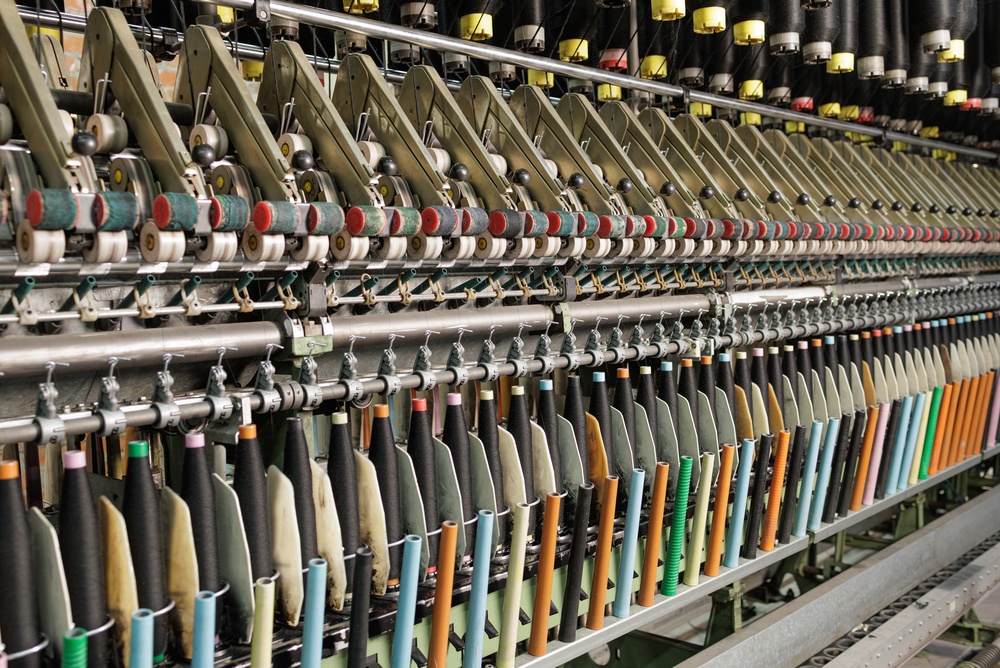
Inside PolyPM: Tech Packs, BOMs, Costing, and Sample Rounds
The detail is where PLM software either earns its place or becomes another system people avoid. Here is what the day to day looks like in ours.
Tech packs that the factory can actually work from
A PolyPM tech pack holds construction notes, points of measure with tolerances, grade rules, stitch and seam specifications, labeling, and packaging instructions. Artwork for screen printing, embroidery, and sublimation attaches to the same style with placement and size by garment size.
Bills of materials that purchasing trusts
Our BOM structure carries fabric, trim, findings, labels, and packaging with consumption that can vary by size and by colorway. Each line links to the supplier, the lead time, and the current price.
Because the BOM sits in the same database as inventory and materials management, requirements net against real stock, including partial rolls and allocated material. Buyers see shortages before cutting, not during it.
Costing that reflects what actually happened
The cost sheet pulls material cost from the BOM, labor from the operation sequence, overhead from your rates, and outside work from subcontract records. Quoted, planned, and actual costs sit side by side on the same style.
That comparison is the one most manufacturers cannot produce quickly today, and it is usually the first report new customers run. Anyone weighing software cost against margin recovery should start there, because the gap between quoted and actual margin on a handful of high volume styles tends to be larger than the software.
Sample management with the comments attached
Proto, fit, salesman, and pre production samples are tracked as records against the style, each with its request, status, due date, and review comments. Lab dips and strike offs carry their approval status and supplier reference.
Can you produce a quoted versus actual cost comparison for last season’s top ten styles this week? Let us show you how PolyPM builds it.
Where PolyNest Fits Alongside PolyPM
Pattern work is the step most PLM software leaves out, and it is the step that decides your fabric cost.
PolyNest is our pattern design system. It handles pattern creation and editing, grading across your size scale, marker making, and automatic nesting to raise fabric utilization. DXF import brings in patterns from customers or outside pattern makers, and output drives plotters and automatic cutters directly.
Why the connection matters
A marker tells you the real consumption for a style at a given size ratio and fabric width. When that figure stays inside the pattern room, the BOM keeps using an estimate, the cost sheet keeps using the estimate, and purchasing keeps buying against the estimate.
Move it into the style record and three things change. Costing reflects actual yield. Material requirements planning orders the right quantity. The cutting room receives a marker that matches the fabric rolls allocated to the order.
Manufacturers who take pattern design seriously as a cost control function, not just a technical step, tend to find savings faster than those chasing labor efficiency alone.
One toolset across development and production
Because PolyNest and PolyPM come from the same team, pattern revisions, grade rule changes, and marker updates land where production planning can see them. Your technical designer, pattern maker, and cut planner stop working from separate files.
PolyNest has been in apparel plants since 1986. The patterns have changed. The reason manufacturers buy it has not.
Do you know your actual marker efficiency by style, or just an average? Ask us for a PolyNest demonstration.
Industries We Serve With PolyPM PLM Software
We work with manufacturers who cut and sew, rather than brands that only buy finished goods. The product development pressures differ by vertical, and the system reflects that.
Apparel manufacturing. Multiple seasons, short runs, frequent style changes, and customers who revise specifications late. Style level control and fast costing matter most here.
Fashion manufacturing. Heavy development volume against tight calendars. Line planning, sample tracking, and colorway management carry the load.
Garment manufacturing. Volume production where bundle tracking, operation sequences, and subcontractor visibility decide whether delivery dates hold.
Textile manufacturing. Roll level inventory, dye lot control, and yield tracking sit at the center of the operation rather than at the edges.
Uniform manufacturing. Repeat styles with customer specific sizing, names, and logos. Decoration steps and reorder handling need to be routine, which is why we treat uniform production as its own workflow rather than a special case.
Workwear manufacturing. Durable constructions, long product lifecycles, and contract customers with detailed specification requirements.
Safetywear manufacturing. Compliance documentation, certified materials, and traceability from supplier lot through to shipped carton.
PLM software that assumes you only design and outsource will not serve a business that has to schedule a cutting room on Monday morning. That is the line we build on the manufacturing side of.
Running one of these verticals and unsure whether a general platform will cope? Tell us about your operation and we will be straight with you.

Locations We Serve With PLM Software
We support apparel manufacturers across the United States, Canada, and Latin America from our headquarters in Baltimore, Maryland.
That covers domestic production in Los Angeles, New York, Miami, Chicago, Houston, and the Carolinas, along with Toronto and Montreal, and the Central American manufacturing corridor through Guatemala City, San Pedro Sula, Tegucigalpa, San Salvador, and Managua.
Discovery calls, demonstrations, training, and ongoing support are available in English and Spanish. For manufacturers with a US or Canadian head office and production in Mexico or Central America, that matters more than most software comparisons account for. The people entering cut tickets and scanning bundles need to work in their own language, and the people reviewing margin reports need to work in theirs.
Managing development in one country and production in another? Ask us how PolyPM handles multi facility operations.
Beyond PLM Software: Other PolyPM Services
Product development is one part of what we do. The rest of the platform is what makes the PLM software useful, because approved data has somewhere to go.
Apparel Manufacturing ERP. Purchasing, vendor management, costing, financials, and reporting across every facility you run. This is the layer that turns product decisions into purchase orders, work orders, and margin figures.
Apparel Manufacturing PLM. Style management, line planning, BOMs, tech packs, colorways, measurements, lab dips, specifications, and sample management, covered throughout this article.
Inventory and Materials Management. Roll level fabric tracking, trim and findings control, warehouse management, shortage alerts, reconciliation, and finished goods visibility, with work in progress counted as inventory rather than guessed at.
Production and Order Management. Production planning and scheduling, cut planning, bundle tracking, shop floor reporting, subcontractor management, decoration, and shipment handling, tied back to customer orders.
PolyNest Pattern Design. Pattern creation and editing, grading, marker making, automatic nesting, DXF import, and direct output to plotters and cutters.
These are not separate purchases that need to be stitched together. Manufacturers typically start with the areas causing the most pain, then extend, because the data model already accounts for the rest.
Not sure which part of your operation to fix first? Walk through it with our team and we will tell you where the return shows up fastest.
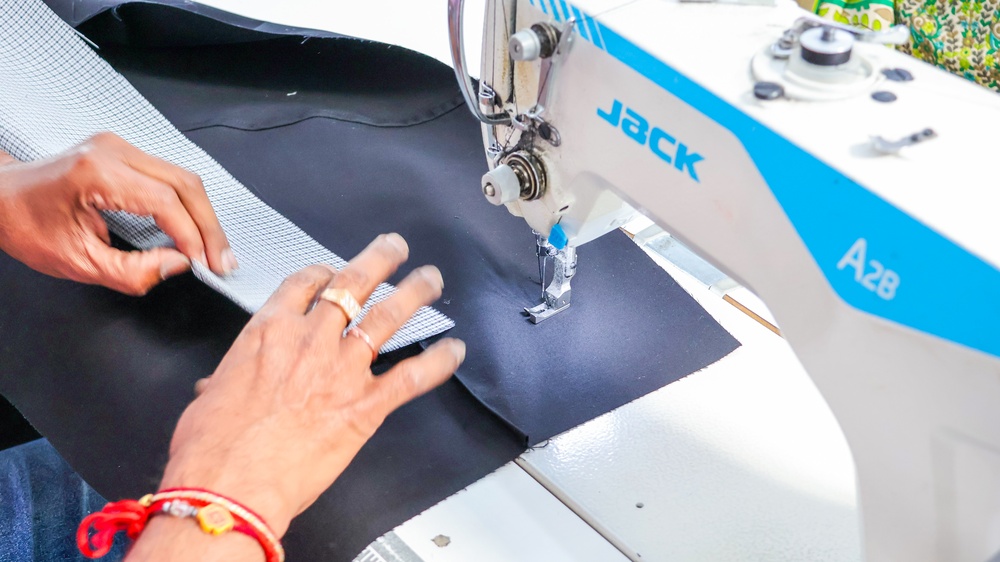
Implementing PLM Software With PolyPM
Product development data is only worth what the factory can do with it. When tech packs, bills of materials, costing, and sample approvals live apart from purchasing and production, the cost shows up as rework, late deliveries, and margin you never see again.
PolyPM puts PLM software and apparel ERP in one system, so an approved style flows into purchasing, cutting, sewing, and shipping without being retyped. PolyNest adds pattern design, grading, and marker making on the same foundation. We build for apparel manufacturers only, which is why the workflow fits without customization.
Ready to see what one connected system would do to your development calendar and your fabric costs? Book a demonstration with PolyPM.
Follow us on LinkedIn for practical apparel manufacturing insights, product updates, and news from the PolyPM team.
PLM Software: FAQs
Is PolyPM PLM software, an ERP, or both?
Both, in one system. PolyPM carries style management, tech packs, BOMs, and costing alongside purchasing, production, inventory, and financials, sharing one database rather than two products joined by an interface.
Can we use PolyPM PLM software without replacing our whole ERP?
Yes. Manufacturers often start with the area causing the most pain, usually product development or inventory, then extend into the rest of PolyPM as it makes sense. The data model already supports the parts you add later.
How does PolyPM handle size and color matrices?
The size and color matrix is built into our data model, not added as custom fields. Orders, BOMs, cut plans, work in progress, finished goods, and invoices all use the same structure, so quantities reconcile without manual mapping.
Does PolyPM track fabric at roll level?
Yes. We track rolls individually with width, dye lot, and remaining length, and allocation respects shade bands. That is how our customers avoid cutting across lots and finding shading rejects at final inspection.
How does PolyPM connect pattern making to costing?
PolyNest produces the marker, and the resulting consumption feeds the style record inside PolyPM. Costing and material requirements planning use actual yield rather than an estimate carried over from quoting.
What makes PolyPM different from general ERP platforms with apparel add-ons?
We build for apparel manufacturing only. Size scales, roll inventory, bundle tracking, decoration, and subcontracting are native behavior, so implementations avoid the customization that generic platforms need to reach the same point.
How long does a PolyPM implementation usually take?
It depends on scope, data quality, and how many facilities are involved. We scope it during discovery and give you a realistic plan rather than a fixed promise, because an honest timeline protects your production schedule.
Does PolyPM support manufacturers operating in Spanish speaking countries?
Yes. Our discovery calls, demonstrations, training, and support run in English and Spanish, which matters for companies managing development in North America and production in Mexico or Central America.