
Choosing manufacturing ERP software for an apparel business usually starts with a demo that looks sharp and ends with a quote for customization. The platform handles work orders, bills of materials, and stock counts well enough. Then someone asks how it manages a single style that ships in eight colors and six sizes, and the room goes quiet.
That gap is the whole problem. Most ERP platforms were designed for companies that build one part number at a time. Apparel manufacturers build a style, explode it into a size and color matrix, cut it from fabric that varies roll to roll, bundle it, send some of it to a decorator, and ship it against a customer’s packing requirements. Generic systems can be bent into that shape, but the bending costs money every year it stays in place.
We built PolyPM around those workflows instead of around a configuration layer. PolyPM has been refined for over two decades as a combined apparel ERP and PLM platform, and our pattern design system, PolyNest, has served cut-and-sew manufacturers since 1986. No add-on modules to bridge the gaps. No consultant retained permanently to keep the workarounds alive.
→ Are you being quoted six figures of customization just to make a general-purpose ERP understand sizes and colorways? Talk to the PolyPM team about what an apparel-native manufacturing ERP software system actually looks like.
Why Generic Manufacturing ERP Software Breaks Down on an Apparel Floor
Manufacturing ERP software written for machinery, electronics, or food production rests on an assumption that quietly fails in apparel: that a finished item has one identity, one recipe, and one predictable path through the plant.
The size and color matrix
In a discrete manufacturing system, every variation of a product is a separate part number with its own bill of materials. Apparel does not work that way. One style in five colors and seven sizes is 35 sellable units that share a pattern, a construction method, most of the trim, and nearly all of the labor. Treating them as 35 unrelated items means 35 BOMs to maintain, 35 cost records to update when a fabric price moves, and 35 rows to reconcile every time a customer changes an order.
Materials that are not interchangeable
A bolt of fabric is not a uniform quantity. Rolls differ in width, usable yardage, shade, and dye lot. Cutting a marker across two shades of the same fabric produces garments that cannot ship together, and a system that only tracks total yards on hand will never warn you. The same applies to shrinkage, fabric faults, and end-of-roll remnants that are technically inventory but practically unusable for a full marker.
Work in progress that moves in bundles
Between the cutting table and the sewing floor, your inventory is not units and it is not raw material. It is bundles tied to cut tickets, moving through operations at different speeds, sometimes leaving the building entirely for embroidery or screen printing before returning. General ERP platforms model WIP as a value on a balance sheet. Apparel plants need to know which bundles are at which operation right now, and which ones are sitting at a subcontractor past their due date.
Costing that changes after the cut
Standard costing assumes material consumption is known in advance. Apparel consumption depends on marker efficiency, fabric width, and how the cut actually ran. A style quoted at 1.42 yards can consume 1.51 once real rolls are on the table, and that variance is where apparel margin disappears. Accurate apparel costing requires the system to connect pattern data, marker results, and actual cut output.
→ Does your current system tell you which bundles are late and which rolls are unusable, or do you find out at the shipping dock? Ask us how PolyPM manufacturing ERP software tracks work in progress at the bundle level.
The Real Cost of Forcing a Non-Apparel System to Fit
Manufacturers rarely abandon a generic ERP because it failed outright. They abandon it because the maintenance never ends.
The first year goes into implementation and custom fields. Sizes become user-defined attributes. Colorways get appended to item descriptions. Someone builds a spreadsheet to translate cut tickets into work orders because the ERP’s work order structure cannot hold a size breakdown. That spreadsheet becomes load-bearing.
The second year adds integrations. A separate PLM tool for tech packs and lab dips, because the ERP has no concept of either. A separate CAD or marker system that exports DXF files nobody re-imports. Each connection is another place where data goes stale and another vendor relationship to manage.
By year three, the total cost of ownership has little to do with the license fee. It is consultant hours, internal staff time spent reconciling systems, and the operational cost of decisions made on numbers that were accurate last Tuesday. We see this pattern often enough that we wrote about how textile production software cost tends to be understated at the point of purchase.
There is also an opportunity cost that rarely appears in any business case. Production managers spend their mornings assembling a picture of the floor instead of acting on it. Sourcing teams place duplicate fabric orders because shortage visibility sits in a different system than purchasing. Finance closes the month on estimates.
→ How much of your team’s week disappears into reconciling systems that were supposed to talk to each other? Book a conversation with PolyPM about consolidating onto one apparel manufacturing ERP software platform.
How PolyPM Solves It: Manufacturing ERP Software Built for Cut-and-Sew
PolyPM handles the apparel-specific structures above as native concepts, not as configuration. Here is the mechanism, step by step.
1. The style is the master record. A style in PolyPM carries its colorways, size scale, measurements, construction details, and bill of materials in one record. Add a color and the size matrix populates with it. Change a trim and the change applies across every variation that uses it. You maintain one object, not dozens of derived part numbers.
2. Product development feeds production directly. Tech packs, lab dips, artwork, measurement specs, and sample history live in the same database as purchasing and production. When development signs off, manufacturing inherits the data. There is no export, no re-key, and no version mismatch between what the designer approved and what the factory builds. This is the practical advantage of unified product lifecycle management for fashion rather than a bolted-on PLM.
3. Material requirements run against real apparel BOMs. MRP in PolyPM reads consumption by size and color, nets it against on-hand and on-order materials, and raises shortages before cutting is scheduled. Because the BOM understands size-dependent consumption, a heavy weighting toward 2XL in one order changes the fabric requirement rather than quietly understating it.
4. Inventory is tracked at roll level. Fabric is recorded by roll with width, length, shade, and dye lot. Allocation happens against specific rolls, so the system can flag when a cut would mix shades or when remnants cannot support the planned marker. Trims, labels, and packaging are tracked alongside. Our inventory and materials management is designed around this level of granularity rather than a simple quantity-on-hand field.
5. Cut planning and bundle tracking run the floor. Cut tickets generate bundles. Bundles are scanned through operations, including out to subcontractors for embroidery, screen printing, sublimation, or wash, and back again. Supervisors see where every bundle sits, which operations are constrained, and which orders are at risk, which is the foundation of useful apparel production software.
6. Costing updates with reality. Estimated cost at quoting, actual cost as materials are consumed and labor is booked. Variance is visible per style and per order, so you learn which products are genuinely profitable rather than which ones looked profitable at quote.
7. Orders, shipping, and finance close the loop. Allocation, pick and pack, customer-specific labeling and packing rules, invoicing, and the general ledger all sit in the same system, which keeps apparel order management consistent with what the floor actually produced.
→ Would it change your week to see shortages, bundle status, and real costs in one screen instead of four? Request a PolyPM manufacturing ERP software demonstration.
What Makes PolyPM Different from Generic ERP Platforms
Plenty of vendors will tell an apparel manufacturer they serve the industry. The useful question is whether the industry logic lives in the core product or in a configuration layer somebody has to maintain.
PLM and ERP share one database. Most competing stacks pair a general ERP with a separate PLM product and an integration between them. That integration is where data drifts. In PolyPM, a measurement spec and a purchase order read from the same tables. Nothing syncs because nothing is separate.
Apparel objects are first-class. Styles, colorways, size scales, markers, cut tickets, bundles, lab dips, and rolls exist as native record types with their own screens and logic. In a general-purpose system, these are user-defined fields someone invented during implementation, which means reporting on them is custom work too.
Decoration and subcontracting are part of the model. Sending bundles out for screen printing or embroidery and receiving them back is normal apparel practice, not an exception to be handled manually. PolyPM tracks the material and labor cost of that trip and keeps the WIP visible while it is off site.
No permanent customization bill. Because the apparel behavior is standard, upgrades do not threaten your workarounds. Manufacturers evaluating us against larger platforms often compare on this point specifically, which is why we published a direct breakdown of PolyPM against Oracle Cloud ERP rather than leaving the comparison to marketing claims. We maintain similar comparisons against NetSuite, BlueCherry, ApparelMagic, Odoo, Microsoft Dynamics GP, and Acumatica.
Scaled for manufacturers, not enterprises in general. Our customers are typically running between one and several plants, often across borders, with lean IT resources. The implementation effort and ongoing administration are sized for that reality.
→ Are you comparing an apparel-native platform against a general manufacturing ERP software platform with an apparel brochure? Let PolyPM walk you through the differences using your own styles.
Where PolyNest Fits Before the First Cut
Material is the largest controllable cost in most cut-and-sew operations, and the decisions that set it are made before anything reaches the sewing floor.
PolyNest is our pattern design system. It handles pattern creation and editing, grading across the full size scale, and marker making with automatic nesting. Markers can be optimized against the actual fabric widths you hold in inventory rather than a nominal width, and output goes directly to plotters and automatic cutters. DXF import brings in patterns from other systems, so adopting PolyNest does not mean recreating a library.
The connection to the rest of the platform matters as much as the nesting itself. Marker efficiency feeds consumption figures, consumption feeds costing and MRP, and MRP drives purchasing. A one percent improvement in fabric utilization shows up in your material purchasing plan rather than being noticed a quarter later. Manufacturers weighing their options here often start with our overview of apparel and textile pattern design software before looking at the full platform.
You can run PolyNest alongside PolyPM manufacturing ERP software or on its own, though the costing accuracy improves considerably when both are in place.
What to Evaluate Before You Commit to Manufacturing ERP Software
If you are midway through a selection process, these questions separate apparel-native platforms from general systems with an industry label.
Ask the vendor to build a style live in the demo, with three colors and a full size run, and then change a trim. Watch how many records they touch.
Ask how the system allocates a specific fabric roll to a specific cut, and what happens when the roll runs short.
Ask where tech packs and lab dips are stored, and whether that storage is the same database as purchasing.
Ask how bundles are tracked while they sit at a decorator, and whether that WIP appears in inventory valuation.
Ask what happens at upgrade time to the customizations required to support sizes and colorways.
Ask for the total five-year cost, including integration maintenance and consultant retainers, rather than the license figure alone.
Most manufacturers who work through that list find the shortlist changes. We covered the broader selection criteria in our look at apparel management software, which is a useful companion when you are building an internal business case.
→ Running a formal selection and want a straight answer on fit before you invest more time? Bring your requirements to PolyPM manufacturing ERP software.
Industries PolyPM Manufacturing ERP Software Serves
The structures described above are not unique to fashion brands. They apply anywhere products are cut from roll goods and assembled by operation.
Apparel manufacturing. Our core market. Style-level product data, roll inventory, bundle tracking, and apparel costing across seasonal and replenishment programs.
Garment manufacturing. Contract and private label producers working to customer tech packs, where accurate costing and on-time delivery determine whether the next program is won. Manufacturers in this segment often compare notes on garment manufacturing ERP software requirements before shortlisting.
Textile manufacturing. Mills and converters managing greige goods, dyeing, finishing, and roll-level stock with lot traceability through to the customer.
Workwear manufacturing. Long-running programs, size-heavy orders, and customer-specific decoration, where repeat accuracy matters more than seasonal novelty.
Safetywear manufacturing. Certified fabrics and components where material traceability back to a specific lot is a compliance requirement rather than a nice-to-have.
Uniform manufacturing. Contract commitments, named-employee orders, embroidery and name tapes, and reorder patterns that run for years.
Fashion manufacturing. Short cycles, frequent line changes, and heavy sampling, where development speed is the constraint.
We also support adjacent sewn products and accessories manufacturers, including businesses that discovered the same structural problems in jewelry and accessory production.
→ Operating in a regulated or contract-driven segment where traceability is non-negotiable? Speak to PolyPM about lot-level tracking in our manufacturing ERP software.
Locations PolyPM Manufacturing ERP Software Serves
We are headquartered in Baltimore, Maryland, and support apparel and textile manufacturers across the United States, Canada, and Latin America. That includes production hubs in Los Angeles, New York, Miami, and the Carolinas, as well as plants throughout Mexico and Central America.
Discovery calls, demonstrations, implementation, and ongoing support are available in English and Spanish, which matters for manufacturers running development in the US and production in Guatemala, Honduras, El Salvador, or Nicaragua. Multi-facility and cross-border operations run on one PolyPM installation, so a planner in one country sees the same inventory and WIP position as a supervisor in another.
→ Running product development and production in different countries on different systems? Ask PolyPM how multi-site visibility works in practice with our manufacturing ERP software.
Beyond Manufacturing ERP Software: Other PolyPM Services
If this article covered only part of what you need, these are the other areas of the platform.
Apparel Manufacturing ERP covers purchasing, MRP, production scheduling, costing, shipping, vendor management, and financials as the operational backbone of the business.
Apparel Manufacturing PLM handles style management, line planning, bills of materials, tech packs, colorways, measurements, lab dips, sampling, and artwork, all feeding manufacturing without re-entry.
Inventory and Materials Management tracks raw materials at roll level, trims, warehouse locations, shortage alerts, finished goods, and reconciliation. Textile manufacturers with heavier lot-tracking needs can look at how we approach ERP inventory for textile manufacturing.
Production and Order Management runs cut planning, bundle tracking, shop floor control, subcontractor management, decoration, and shipment execution. Our breakdown of apparel production software systems goes deeper on the shop floor side.
PolyNest Pattern Design covers pattern creation, grading, marker making and optimization, DXF import, and plotter and cutter integration.
→ Not sure which part of the platform addresses your biggest bottleneck? Tell PolyPM what is breaking and we will point you at the right starting place.
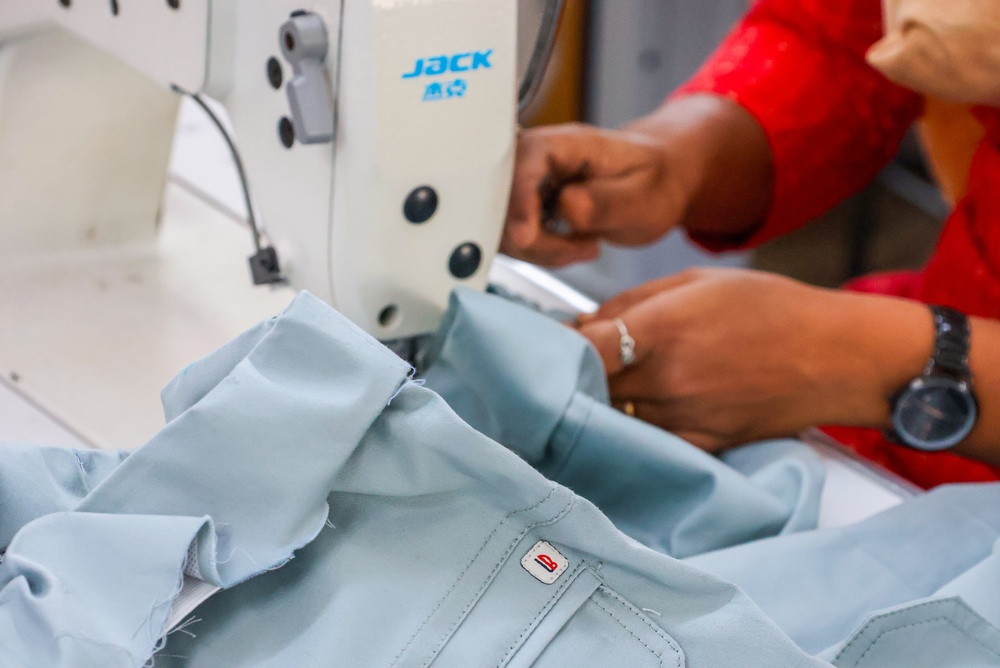
Choose the Right Manufacturing ERP Software
Apparel manufacturers do not struggle with generic systems because those systems are poorly built. They struggle because the underlying model assumes one product, one BOM, one predictable path. Styles, size matrices, dye lots, bundles, and decoration trips break that assumption on day one, and every workaround added afterward becomes a permanent cost.
PolyPM takes a different route by treating those structures as native, with PLM and ERP in one database and PolyNest feeding accurate consumption from the marker forward. That is what separates apparel-native manufacturing ERP software from a general platform wearing an industry label.
→ Ready to see your own styles, rolls, and cut tickets running in an apparel-native system? Book a PolyPM demonstration and bring your hardest workflow.
→ Follow PolyPM on LinkedIn for practical guidance on apparel manufacturing, production visibility, and software selection.
PolyPM as Manufacturing ERP Software: FAQs
What makes PolyPM different from general manufacturing ERP software?
PolyPM was built for cut-and-sew production rather than adapted to it. Styles, colorways, size scales, fabric rolls, cut tickets, and bundles are native record types with their own logic and reporting. In general platforms, those concepts are user-defined fields created during implementation, which means every report, screen, and upgrade involving them becomes custom work. PolyPM also combines PLM and ERP in one database, so there is no integration between product development and manufacturing to maintain or troubleshoot.
Does PolyPM include PLM, or is it a separate purchase?
PLM is part of PolyPM, not a separate product or module. Style management, line planning, bills of materials, tech packs, colorways, measurement specs, lab dips, sample tracking, and artwork all live in the same system as purchasing, production, inventory, and finance. When development approves a style, manufacturing works from that exact record. This is the main structural difference between PolyPM and stacks that pair a general ERP with a third-party PLM tool connected by an integration.
How does PolyPM manufacturing ERP software handle fabric rolls and dye lots?
PolyPM records fabric at the individual roll level, capturing width, length, shade, and dye lot rather than a single quantity on hand. Allocation happens against specific rolls, so the system can flag a cut that would mix shades across one order and identify remnants too short to support a planned marker. For textile manufacturers and safetywear producers, that same roll and lot detail carries through to traceability requirements after shipment.
Can PolyPM track work in progress when bundles go to a subcontractor?
Yes. Bundles sent out for embroidery, screen printing, sublimation, or wash stay visible in PolyPM while they are off site, along with the associated material and labor cost. Supervisors can see which bundles are at which vendor, how long they have been there, and which customer orders are exposed if they come back late. Decoration and subcontracting are treated as standard apparel practice in our model rather than exceptions handled on a spreadsheet.
How does PolyPM improve apparel costing accuracy?
PolyPM holds both estimated and actual cost against the same style and order. Estimates come from the BOM and marker-based consumption, and actuals accumulate as specific rolls are issued and labor is booked through operations. Variance is visible per style, so you can see where quoted margin and real margin diverge. When PolyNest is in use, consumption figures reflect optimized markers against the fabric widths you actually hold, which removes a common source of costing error.
Is PolyNest required to use PolyPM manufacturing ERP software?
No. PolyNest and PolyPM can each be used independently, and some manufacturers adopt one before the other. That said, the two reinforce each other. PolyNest produces pattern, grading, and marker data that feeds consumption into PolyPM’s MRP, costing, and purchasing. Running both means fabric utilization improvements show up directly in material planning rather than being discovered later. PolyNest also imports DXF files, so existing pattern libraries carry over.
What size of manufacturer is PolyPM designed for?
PolyPM suits apparel, garment, textile, workwear, uniform, safetywear, and fashion manufacturers running anywhere from a single plant to several facilities across borders, typically with limited internal IT capacity. The implementation scope and ongoing administration are sized for operating companies rather than large enterprises with dedicated ERP teams. Multi-site and multi-country operations run on one installation, which keeps inventory and production visibility consistent across locations.
How long does it take to implement PolyPM as our manufacturing ERP software?
Timelines depend on how many facilities are involved, how clean your existing product and inventory data is, and whether PolyNest is included. Because apparel behavior is standard in the product rather than custom-built, projects avoid the long configuration phase that generic platforms require to understand sizes, colorways, and roll inventory. We scope each implementation after a discovery call and demonstration, and support is available in English and Spanish throughout.