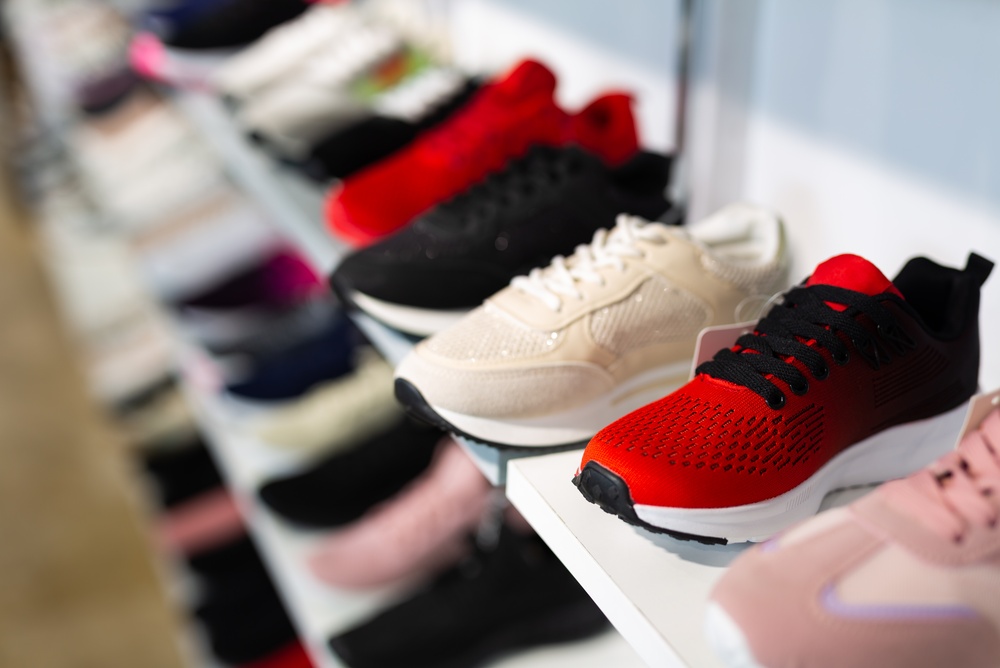
Footwear manufacturing carries a level of operational complexity that few other product categories share. A single style can generate dozens of size, width, and color combinations, each with its own bill of materials, costing structure, and production sequence. Finding the best ERP for footwear operational excellence means finding a system that was designed around that complexity in the first place.
Most manufacturers do not start there. They start with a general business platform, add spreadsheets to cover the size and width matrix, add another spreadsheet for costing, and end up managing the gaps instead of the product. We built PolyPM differently.
Our ERP and PLM run on one platform, with a data model already shaped around style, size, material, and multi-stage production, so footwear and apparel manufacturers spend their time running the business rather than configuring software to approximate it. PolyNest, our pattern design system, has been apparel-native since 1986, and we have refined PolyPM for more than two decades alongside the manufacturers who use it. No add-ons. No workarounds.
→ Is your team still tracking size runs and material variants in spreadsheets outside your ERP? Talk to the PolyPM team about software built specifically for footwear and apparel manufacturers.
What Operational Excellence Really Means for Footwear Manufacturers
Operational excellence gets used loosely, but for a footwear manufacturer it has a specific meaning. It means product development moves quickly from concept to sample without losing information along the way.
It means production planners know what materials are on hand, what is on order, and what is committed to a specific cutting or assembly run. It means costing reflects reality rather than an estimate built in a spreadsheet three seasons ago.
The Complexity of Footwear Production
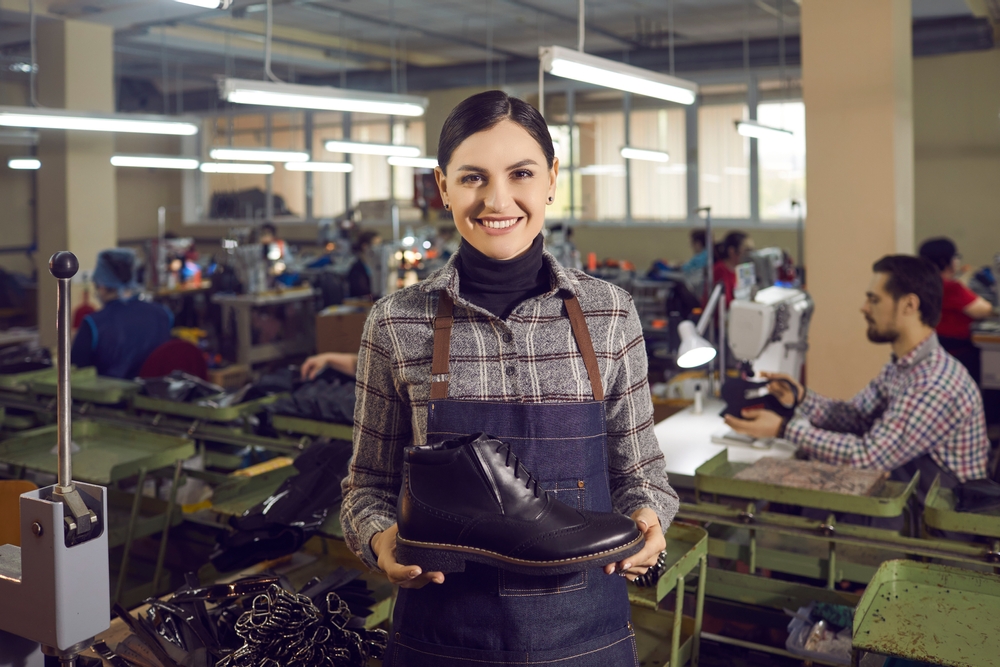
Footwear production combines cut-and-sew processes with molding, lasting, bonding, and finishing steps that apparel production does not typically involve. A single shoe style might require upper materials, lining, insole board, midsole compounds, outsole rubber, eyelets, laces, and adhesives, each sourced from different vendors with different lead times.
Multiply that by a full size run across multiple colorways and the bill of materials for one style can rival the complexity of an entire apparel line.
Why Generic Software Falls Short
Generic ERP platforms are built to manage inventory and orders in a general sense, not the realities of grading, size and width matrices, or roll-level material tracking. When a footwear manufacturer forces this kind of production into a system designed for distribution or general manufacturing, teams build workarounds in spreadsheets to fill the gaps.
Those workarounds create exactly the disconnected data and manual rework that operational excellence is supposed to eliminate, and they hide it well. A costing spreadsheet looks authoritative until someone discovers it has been running on last season’s leather price.
The Cost of Staying on Disconnected Systems
Many footwear manufacturers do not realize what disconnected systems cost them until they add up the hours spent reconciling data between spreadsheets, email threads, and whatever software runs purchasing or accounting. A production planner might be working from one version of a bill of materials while the costing team works from another, and neither may reflect the latest change made by product development.
These small gaps compound quickly in footwear. A missed material substitution can affect fit and durability. A costing error on a single style can erode margin across an entire production run once it scales to thousands of units. A shortage that goes unnoticed until the cutting stage can push a shipment date back by weeks, which puts pressure on relationships with wholesale and private label partners.
Operational excellence comes from running the business on systems that keep information accurate and visible as conditions change day to day. That is the standard spreadsheets and disconnected point solutions were never designed to meet, and it is the standard we designed PolyPM around. When a developer revises a construction detail, purchasing, costing, and the production plan see the change the same day.
→ Are your bills of materials living in three places at once? Ask PolyPM how one connected record keeps development, purchasing, and the floor on the same page.
Digital Transformation Trends Shaping Footwear Manufacturing
Footwear manufacturers face the same pressure apparel and textile manufacturers have dealt with for years: shorter product cycles, more frequent style changes, and growing demand for transparency across the supply chain. Buyers expect faster turnaround, and manufacturers relying on manual processes struggle to keep pace.
Cloud-based platforms have made it easier for manufacturers with facilities across different states or borders to work from a single source of production and inventory data. Real-time visibility into work in progress means production managers do not wait for an end-of-day report to know whether a cutting run is on schedule. Integrated product development means a design change made this week does not require separate updates in three other systems.
These trends point toward the same conclusion. Manufacturers that connect product development, inventory, and production within one platform respond faster, control costs better, and grow without adding administrative overhead at the same rate as production volume. That outcome is what we designed PolyPM to produce.
What to Look for in the Best ERP for Footwear Operational Excellence
Choosing software starts with understanding which capabilities actually move the needle for a footwear business. Not every ERP module matters equally, and footwear manufacturers should prioritize systems built with their production realities in mind.
When choosing the best ERP for footwear operational excellence, the following capabilities are worth evaluating closely:
- Style, size, and colorway matrix management that reflects how footwear is actually built and sold
- Bill of Materials functionality that supports multi-component construction, from uppers to outsoles
- Roll-level and unit-level inventory tracking for raw materials sourced from multiple vendors
- Production scheduling that accounts for sequential steps like cutting, stitching, lasting, and finishing
- Costing tools that update automatically as materials, labor, and overhead change
- Integrated product development and tech pack management so design and production share the same data
- Pattern and last development tools that connect directly to the production plan
- Purchasing and vendor management for a supply chain that often spans multiple countries
PolyPM covers all of these natively, which is the short answer to why manufacturers evaluating which ERP has the best features for apparel efficiency tend to end up comparing industry-specific systems rather than general ones.
→ Building a requirements list for your next ERP evaluation? Bring it to the PolyPM team and we will show you which workflows are already native.
How PolyPM Solves Problems Around The Best ERP for Footwear
We built PolyPM specifically for apparel, footwear, and sewn products manufacturers rather than adapting a generic ERP framework. That distinction shows up in every module, because each one was designed around cut-and-sew and molded goods production rather than configured to tolerate it.
If you are planning on implementing PolyPM as the best ERP for footwear, here is how the platform handles a footwear style from first sketch to shipment.
1. Product development creates the record once. A style is set up once in our Fashion Apparel PLM Software, with components, colorways, size and width curves, specifications, and tech packs held in a single product record. Nothing gets rebuilt in a second system later.
2. The bill of materials drives purchasing. Because PLM and ERP share the same data, the bill of materials created during development flows directly into material requirements planning and purchase orders. A change to an upper material or an adhesive updates the demand picture immediately instead of waiting for someone to re-key it.
3. Materials are tracked at the level they are actually consumed. Our Apparel Inventory Management Software tracks leather, synthetic uppers, foam compounds, rubber, and hardware down to the roll or unit, flags shortages before they stop a cutting run, and gives finance and operations a shared view of what is available, committed, and due in.
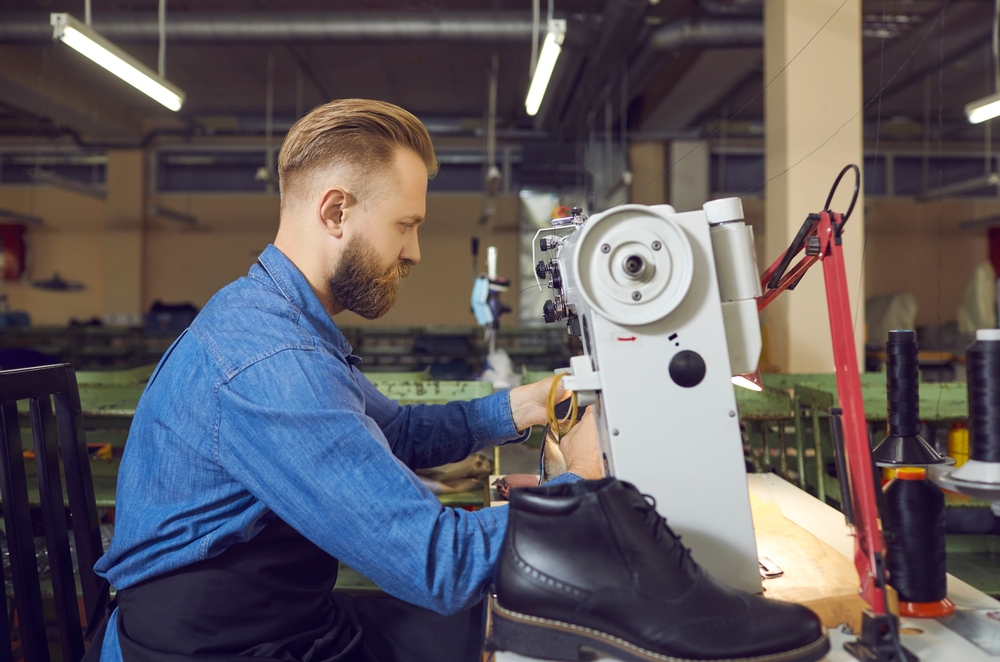
4. Production is planned against real capacity and real material. Apparel Production Software inside PolyPM supports production planning, scheduling, cut planning, bundle tracking, and work in progress visibility, so managers see where each order stands across cutting, stitching, lasting, and finishing rather than guessing from a morning stand-up.
5. Subcontracted work stays inside the same system. Many footwear manufacturers outsource stitching or bonding to partner facilities. Subcontractor management is built into PolyPM, so outsourced operations appear in the same WIP picture as in-house work.
6. Costing updates itself. Costs stay tied to the live bill of materials, so a material price move or a revised construction detail updates the estimate. Margin conversations happen before the production run rather than after it.
Pattern and Last Development Support Through PolyNest
Pattern accuracy has a direct effect on material cost and production speed. Our PolyNest Pattern Design Software handles pattern design, grading, and marker making, and connects to automatic cutters and plotters so pattern data moves straight into cutting operations without a manual handoff.
For footwear manufacturers working with upper patterns and components, better marker efficiency compounds across an entire production run. A small improvement in material utilization on a high-volume style is worth more than most efficiency projects on the floor.
→ Are gaps between your design team and your production floor slowing down every new style launch? Contact PolyPM to see how one integrated platform closes that gap.
What Makes PolyPM Different from Generic and Adapted ERP
Footwear manufacturers evaluating software usually encounter three broad categories of system. Understanding the difference explains why the search for footwear-ready ERP tends to lead back to industry-specific platforms.
Large Enterprise ERP Platforms
Systems like SAP S/4HANA and Microsoft Dynamics 365 are well-established platforms that handle finance, procurement, and general manufacturing at enterprise scale. They can be configured to support footwear operations, including size and color variant structures and multi-plant planning, but that configuration usually requires significant implementation time and partner support to model grading, lasting, and component-level bills of materials. They suit large organizations with internal resources to manage extensive customization.
General Business ERP Platforms
Broader platforms such as NetSuite, Odoo, and Zoho ERP offer flexible inventory, purchasing, and order management that works across many industries. For a footwear manufacturer, these systems generally need item templates, size and color variants, and bill of materials structures built out before purchase and sales workflows run smoothly. Footwear-specific features like grading rules or roll-level material tracking are rarely native. Our PolyPM vs NetSuite and PolyPM vs Odoo comparisons lay out where those gaps usually appear.
PolyPM: Built Around Footwear and Apparel Production
PolyPM is the best ERP for footwear because it starts from a data model that already reflects style, size, material, and production complexity. There is no variant framework to design, no custom bill of materials structure to build, no bolt-on PLM to integrate. Manufacturers spend implementation time mapping their own processes rather than teaching the software what a size run is.
That difference also shows up after go-live. When we release a new version, every customer receives it at no additional cost, so the configuration work you have done around your business is preserved instead of rebuilt. Manufacturers weighing us against enterprise suites can see the detail on our PolyPM vs Oracle Cloud ERP comparison.
No single platform fits every manufacturer. A large multinational brand with an internal implementation team and years of runway may find an enterprise system fits a broader corporate technology strategy. A mid-sized or growing footwear manufacturer that needs to be running efficiently within months is usually better served by a platform where the workflows are already built in. We would rather help you reach that conclusion honestly than sell past it.
→ Not sure which category of ERP fits your production model? Reach out to PolyPM to walk through your current systems and where the gaps are.
Key Areas Where PolyPM Delivers Results as the Best ERP for Footwear
Choosing an ERP affects margin, lead time, and customer satisfaction across the business. These are the areas where footwear manufacturers tend to see the change first.
Costing Accuracy
Footwear costing involves materials, trims, labor across multiple production stages, and overhead, and margins erode quickly when any of those inputs go stale. PolyPM keeps costing tied to the live bill of materials, so a price change or a revised construction detail updates the estimate automatically instead of waiting on a spreadsheet.
Order Management Across Wholesale and Private Label
Many footwear manufacturers serve a mix of wholesale accounts, private label programs, and direct relationships, each with different specifications, packaging requirements, and delivery windows. PolyPM keeps every commitment visible in one system, and the same order management structure supports high-variation programs without breaking as account count grows.
Vendor and Subcontractor Management
Footwear supply chains often span multiple countries and involve subcontracted processes. Vendor management inside PolyPM keeps purchase orders, lead times, and quality records organized, so sourcing teams make informed decisions instead of tracking vendor performance by memory and email. Manufacturers buying textile inputs alongside footwear materials can review our ERP for the textile industry coverage for related sourcing considerations.
→ Is inconsistent costing eating into your margin on every new style? Talk to PolyPM about connecting your bill of materials directly to production costing.
Industries PolyPM Serves Alongside Footwear
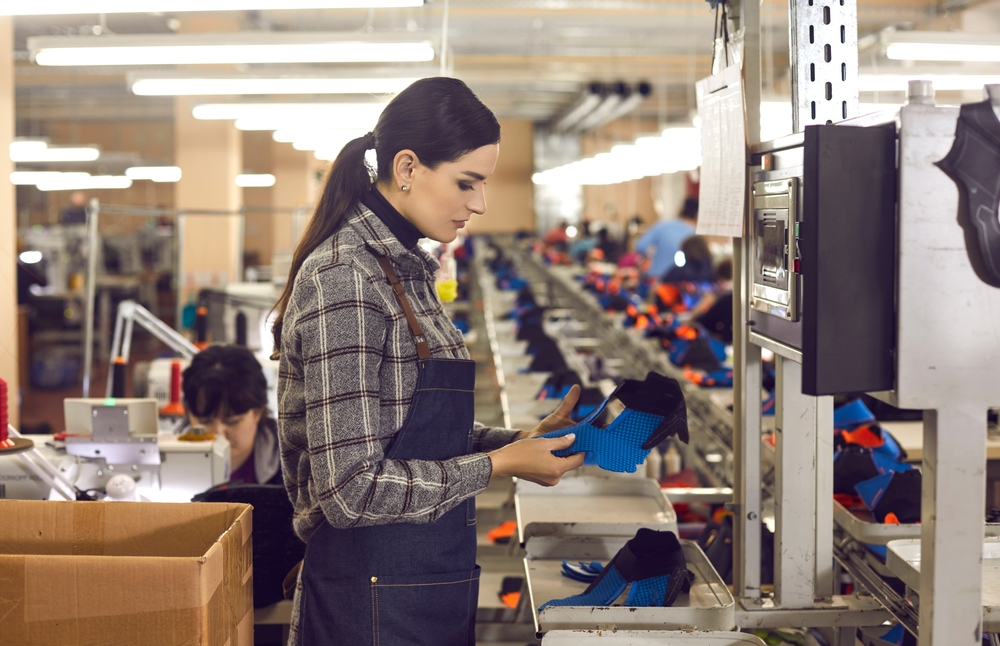
Footwear rarely exists on its own inside a manufacturing business. The principles above apply across several adjacent categories we support, and many of our customers run more than one of them under the same roof.
Manufacturers producing safety footwear alongside protective garments need the same variant and material tracking discussed throughout this article, and can review our safetywear ERP coverage for detail on that overlap. Workwear producers making durable footwear and garments together benefit from a shared platform, covered on our workwear ERP page.
Uniform manufacturers supplying footwear as part of a broader program should look at ERP for uniforms, since program-based manufacturing shares many of the same order management and costing requirements. Manufacturers running garment lines beside footwear will find ERP for garment manufacturing and fashion ERP software useful companions, and our broader apparel manufacturing coverage explains how the same platform holds all of it together.
→ Do you manufacture footwear alongside apparel, workwear, or uniforms under one roof? Connect with PolyPM to see how one platform can support all of it.
Where PolyPM Supports Manufacturers as the Best ERP for Footwear
We work with manufacturers across the United States, Canada, and Latin America, including operations running production across borders. Many of our customers develop product in one country and cut, stitch, and assemble in another, which is exactly the situation multi-facility visibility is meant to solve.
Discovery calls, demonstrations, and ongoing support are available in English and Spanish. When a production supervisor in Central America and a sourcing manager in the US are looking at the same WIP screen, support conversations move faster when both can happen in their own language.
Our headquarters is in Baltimore, MD, and our team has spent decades working directly with apparel and footwear manufacturers rather than passing questions to a general help desk. When you call about a grading rule or a cut plan, you are talking to people who already know the terminology.
Other PolyPM Services That Support Footwear Operations
Footwear manufacturers typically start with one part of the platform and expand as they retire older tools. Each of the following runs on the same database, so adding one does not create another integration project.
Apparel Manufacturing ERP is the operational and financial backbone, covering purchasing, production, costing, shipping, and financial management. Apparel Manufacturing PLM handles style management, line planning, bills of materials, tech packs, colorways, measurements, lab dips, and sample management.
Inventory and Materials Management covers raw materials, fabric and roll-level tracking, trims, warehousing, shortage alerts, and finished goods. Production and Order Management brings together scheduling, bundle tracking, shop floor visibility, subcontractor work, and shipment coordination, including decoration processes like screen printing, embroidery, and sublimation for manufacturers running branded programs.
PolyNest Pattern Design completes the picture with pattern design, grading, marker making, and direct cutter and plotter integration.
→ Retiring one spreadsheet at a time, or ready to replace the whole stack? Start a conversation with PolyPM about a phased rollout.
How to Evaluate and Implement PolyPM for Footwear Manufacturing
Selecting new software is a significant decision, and footwear manufacturers benefit from a structured evaluation rather than reacting to a single sales pitch. This is the process we walk prospective customers through.
Audit current systems. Document every spreadsheet, disconnected tool, and manual process currently used to manage product development, inventory, and production.
Define footwear-specific requirements. Write down the size, width, and material variant needs unique to your product lines so vendors can be evaluated against real requirements rather than generic feature lists.
Request a working demonstration. Ask any provider, including us, to show footwear-specific workflows: bill of materials creation, costing, cut planning, and production scheduling. Manufacturers comparing apparel production software systems should insist on seeing their own style structure modeled during the demo.
Plan data migration carefully. Existing style, material, and vendor data needs a clear migration plan so historical information stays usable after go-live.
Train teams by department. Product development, production, and inventory teams each use different parts of the system, so training should reflect how each group works day to day. Our implementation team structures onboarding this way rather than running one generic session.
Run in parallel before retiring old tools. Give teams long enough to confirm that costing, inventory counts, and production schedules match expectations. Rushing this step creates more resistance from staff than the software itself ever does.
Ongoing support matters as much as the rollout. Ask any provider how new users are trained as your team grows, how updates are communicated, and how quickly support requests are resolved. Our product lifecycle management customers raise those questions early, and we answer them the way we would want them answered.
→ Ready to build an evaluation plan around your specific production needs? Schedule time with PolyPM to get started.
Finding the Best ERP for Footwear Operational Excellence with PolyPM
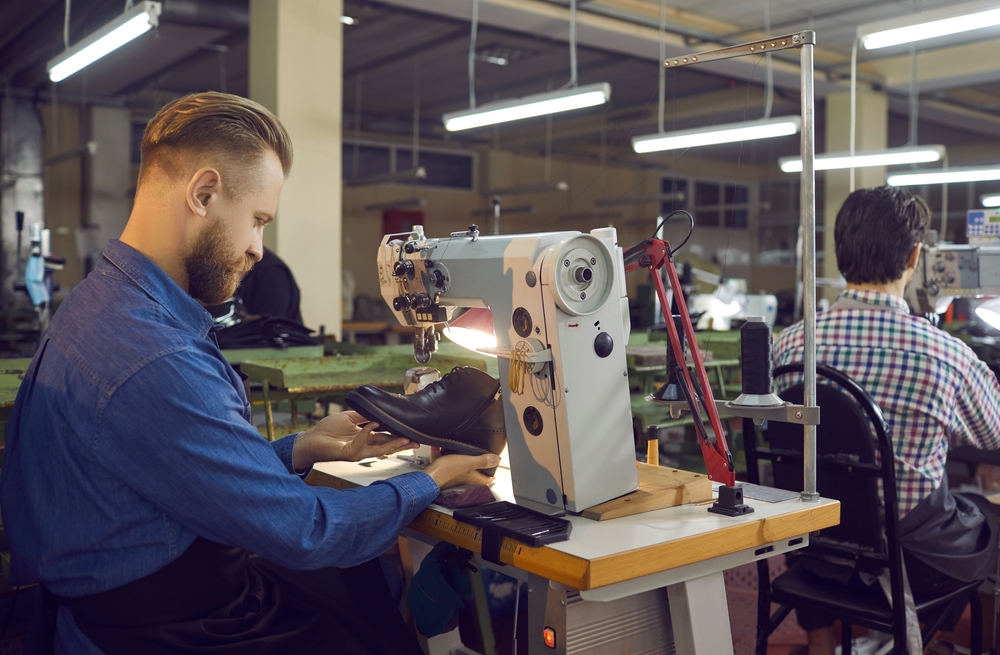
Choosing well comes down to selecting software that reflects how footwear is actually developed, costed, and produced. General platforms can be configured to approximate those workflows, but PolyPM removes that burden by starting with a data model built around style, size, material, and multi-stage production complexity.
From product development through purchasing, production, and shipping, PolyPM and PolyNest give footwear and apparel manufacturers one connected system instead of a patchwork of spreadsheets. Manufacturers ready to move toward real operational excellence can start by reviewing their current systems against the requirements outlined above.
→ Want to see your own styles, size runs, and bills of materials running inside a footwear-ready platform? Book a demonstration with PolyPM and bring your hardest style with you.
→ Follow PolyPM on LinkedIn for more insights on apparel and footwear manufacturing software.
The Best ERP for Footwear Operational Excellence: FAQs
What makes PolyPM the best ERP for footwear operational excellence rather than a general manufacturing system?
PolyPM supports style, size, width, and color variant management, multi-component bills of materials, and sequential steps like cutting, lasting, and finishing natively. General manufacturing ERPs usually require those structures to be built before footwear production can run through them at all.
How is PolyPM different from generic ERP platforms used for footwear?
We built PolyPM specifically for apparel, footwear, and sewn products manufacturers. Style management, bills of materials, costing, and production planning are already structured around how footwear is produced, so implementation focuses on your processes instead of on configuration.
Can PolyPM handle both product development and production for footwear manufacturers?
Yes. PolyPM combines apparel PLM and apparel ERP on one platform, so tech packs, specifications, and bills of materials created during development flow directly into purchasing and production without duplicate entry or reconciliation between systems.
Does PolyPM support pattern and last development for footwear?
PolyNest, our pattern design system, handles pattern design, grading, and marker making, and connects to automatic cutters and plotters. Upper patterns move into cutting without a manual handoff, and better marker efficiency reduces material waste across the run.
How does PolyPM track inventory for footwear materials like leather and rubber compounds?
PolyPM tracks raw materials down to the roll or unit level, applies shortage alerts before a cutting run is affected, and gives production and finance teams a shared real-time view of what is on hand, committed, and on order across the supply chain.
Is PolyPM suitable for manufacturers producing footwear alongside workwear, uniforms, or safety apparel?
Yes. Many of our customers run footwear beside workwear, uniform, or safetywear programs and manage all of it inside PolyPM rather than maintaining separate tools per category.
How long does a PolyPM implementation take for a footwear manufacturer?
Timelines depend on the number of styles, vendors, and systems being replaced. Because footwear and apparel workflows are already native to PolyPM, implementation centers on data migration and department-level training rather than on building custom variant and bill of materials structures first.
What is the first step to evaluating PolyPM for footwear manufacturing?
Audit your current systems and spreadsheets to identify where data is disconnected, then request a working demonstration focused on your own footwear workflows, including variant management, cut planning, and costing. We would rather show you your own styles running in PolyPM than walk through a generic feature tour.