
Choosing a footwear ERP software in 2026 is no longer about which system has the cleanest interface or the longest feature list. For footwear manufacturers, the real question is whether the system can continue to run production when specifications, materials, and schedules change mid-production.
Styles are adjusted late. Materials are substituted. Variations multiply. Work moves between internal lines and subcontractors. When product data, inventory, and production are no longer aligned, ERPs stop being a system of execution and becomes a reporting tool while the factory runs elsewhere.
Manufacturers operating in Los Angeles, New York, Miami, Chicago, Houston, and Greenville, as well as nearshore regions including Guatemala City, San Pedro Sula, Tegucigalpa, San Salvador, and Managua, face these challenges every day.
Footwear manufacturing also introduces complexity beyond apparel alone. Uppers, linings, soles, midsoles, adhesives, and hardware often converge late in the process. Assembly sequencing, tolerance constraints, and material dependencies increase execution risk, especially when systems are not designed to manage change once production is underway.
This is where many ERP software solutions fail.
This blog explains how PolyPM approaches footwear ERP software differently by applying an execution-first architecture already proven across textile and apparel manufacturing environments.
→ Are production changes already pushing your team to work outside your ERP? Contact PolyPM to see how our real-time footwear ERP software keeps execution aligned without spreadsheets.
When manufacturers search for footwear ERP software solutions, they are trying to solve operational execution problems, not just manage orders or reporting.
Footwear production shares many of the same challenges as clothing and garment manufacturing, often with tighter tolerances and higher material sensitivity.
Common issues include:
• Product changes reaching production too late
• BOMs and materials re-entered across systems
• Decoration scheduled outside production
• Inventory ordered against outdated assumptions
• Limited visibility into work in progress
• Systems that break under high variation
By 2026, an efficient footwear ERP software must keep product data, production, inventory, and execution aligned in real time. Systems that separate PLM, ERP, and production workflows cannot keep up with real factory conditions.
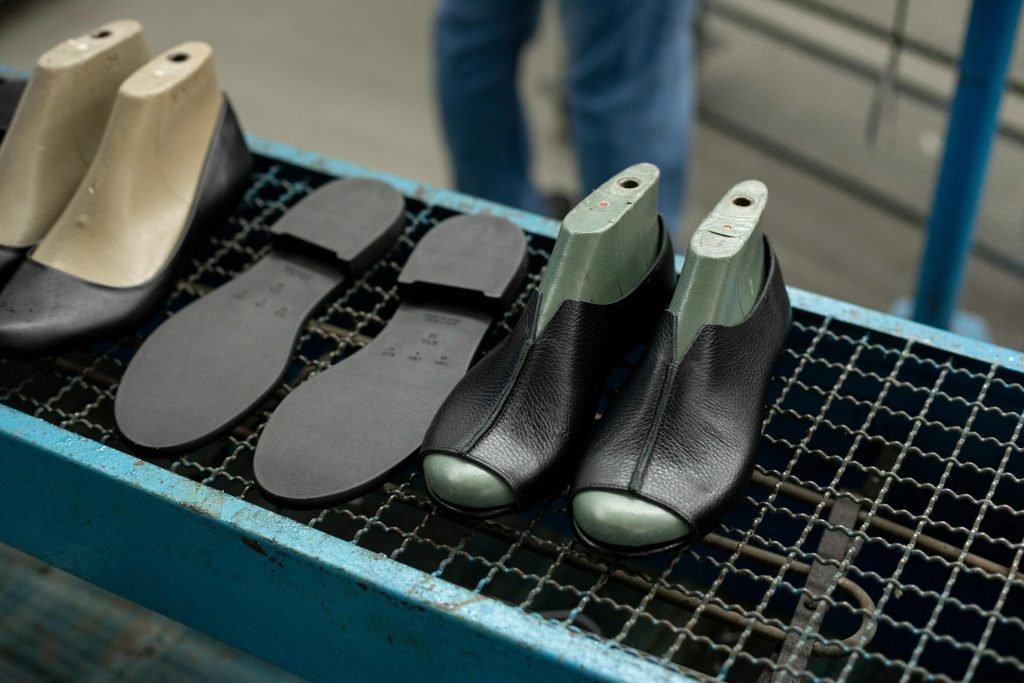
PolyPM is a unified PLM and ERP platform designed for textile and garment manufacturing execution, making it structurally suitable for footwear operations facing the same execution pressure. Footwear manufacturers face the same execution challenges at scale, with even higher dependency on material accuracy, sequencing, and work in progress visibility.
Unlike many footwear ERP software platforms that treat PLM as a design handoff, PolyPM allows product data to actively drive production inside the same system.
With PolyPM:
• Product data flows directly into production
• BOMs and materials stay aligned through execution
• Manufacturing runs natively inside the ERP
• Decoration is scheduled as production
• Inventory and WIP reflect actual factory activity
This structure is critical for footwear manufacturers managing frequent changes and high variation.
→ Do late changes force manual workarounds or use of spreadsheets? Talk to PolyPM about an ERP software built for specifically for footwear execution.
Most ERP demos avoid discussing one major issue: reimplementation.
For footwear manufacturers, reimplementation is not just an IT project. It is a production risk.
Generic ERP platforms, like NetSuite, SAP, Dynamics, Odoo, and Acumatica often require:
• Full reimplementation every 5 to 7 years
• Redevelopment and retesting during upgrades
• External consulting projects
• Production disruption
These projects cost hundreds of thousands to millions of dollars and force teams to rebuild workflows repeatedly.
PolyPM operates differently.
PolyPM customers upgrade version to version without reimplementation, without external consulting, and without production downtime. Custom workflows remain intact, and manufacturing continues uninterrupted.
For footwear manufacturers evaluating different footwear ERP softwares in 2026, this difference directly affects long-term operational risk.
→ Do you know what your next ERP upgrade will actually cost? Contact PolyPM to assess and predict long-term upgrade risk.
When comparing footwear ERP software platforms to generic ERP platforms like Oracle, SAP, NetSuite, Acumatica, and Odoo, the differences appear on the production floor.
Generic ERP platforms typically:
• License manufacturing as an add-on
• Require customization for production workflows
• Treat decoration as external
• Break custom logic during upgrades
• Push execution into spreadsheets
PolyPM:
• Includes manufacturing as a core function
• Supports apparel and footwear workflows natively
• Treats decoration as part of production
• Preserves workflows during upgrades
• Runs PLM and ERP on a single database
For manufacturers producing footwear alongside clothing and garment programs, this difference determines whether ERP survives real production pressure.
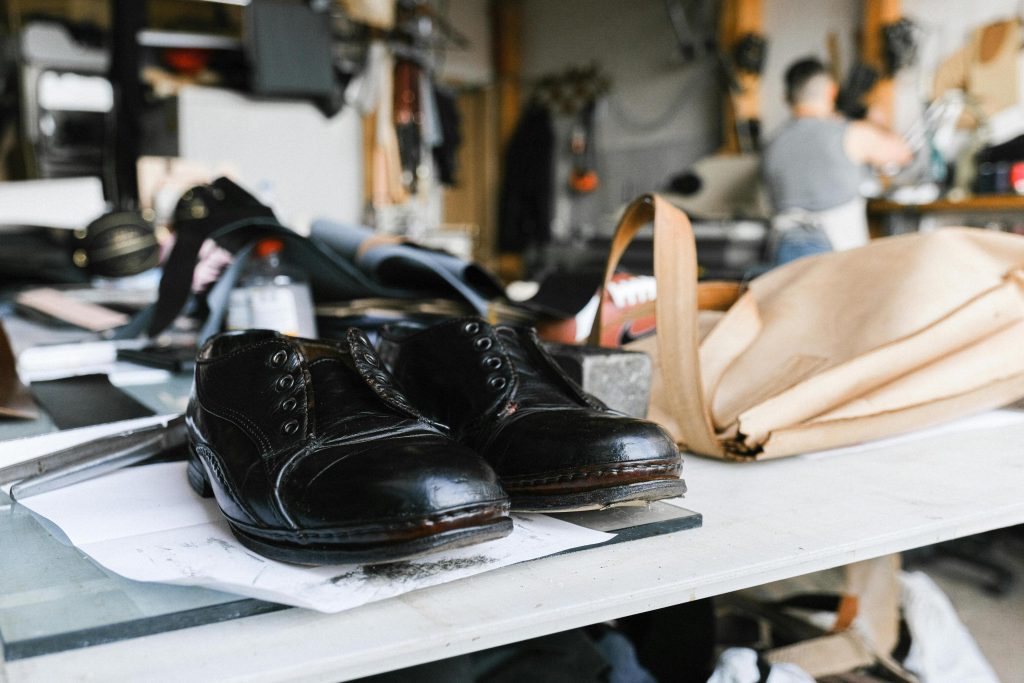
Footwear manufacturers also frequently evaluate apparel-focused ERP platforms such as BlueCherry, ApparelMagic, and AIMS360 when searching for footwear ERP software platforms. These systems often perform well in order management, design-side workflows, or reporting.
The difference becomes clear once production is underway. Apparel-focused ERP systems often stop at reporting production status. PolyPM (an ERP + PLM) is designed to run production itself , keeping work in progress, material usage, and changes controlled inside one system. As specifications shift and variation increases, PolyPM maintains alignment across PLM, inventory, and execution instead of allowing production to drift into spreadsheets or disconnected tools.
Footwear inventory behaves like apparel inventory. In footwear production, this includes coordinating materials that converge late in assembly and cannot be easily substituted once production is underway.
Execution challenges include:
• Material substitution
• Yield variation
• Continuous WIP movement
• Subcontractor workflows
• Finished goods reconciliation
Generic systems assume inventory is static. A footwear ERP software cannot assume that.
PolyPM ties inventory directly to production execution. Inventory reflects what is actually producible, not theoretical assumptions made days earlier.
→ Do you lose visibility once work leaves the floor or goes to subcontractors? Contact PolyPM to see how we track WIP without blind spots.
Some footwear manufacturers also operate across broader textile and apparel categories, including swimwear, socks, shirts, uniforms, or clothing in general.
Managing multiple product types increases execution risk when systems are fragmented.
PolyPM supports multi-category manufacturing by running PLM and ERP together as one execution platform. Product changes immediately impact purchasing, planning, and production without re-entry.
What is a footwear ERP software?
A footwear ERP software manages production, inventory, and execution for footwear manufacturing. PolyPM fits this definition by running PLM and ERP together in one system.
How is PolyPM different from generic ERP platforms?
Generic ERP platforms focus on reporting. PolyPM was built for apparel and garment manufacturing execution, making it suitable for footwear operations with frequent change.
Can PolyPM handle high-variation footwear programs?
Yes. PolyPM keeps BOMs, materials, and execution synchronized as changes occur.
Does PolyPM support subcontractor workflows?
Yes. PolyPM tracks what is sent, what is held, what is completed, and what remains.
Is PolyPM suitable for nearshore footwear production?
Yes. PolyPM supports distributed manufacturing environments across U.S. and nearshore facilities.
For footwear manufacturers, the risk is not selecting the wrong feature set, but selecting a system that cannot survive production reality.
The best footwear ERP software is not the one with the longest feature list. It is the one that continues to work when production becomes unpredictable.
For manufacturers that need real-time execution control, visibility into WIP, and freedom from constant reimplementation risk, PolyPM is structurally different.
→ Follow PolyPM on LinkedIn for insights on textile, apparel, and footwear ERP strategy. We are also on Facebook!