
Most conversations about fabric waste in apparel manufacturing point to the cutting floor. The markers are inefficient. The fabric utilization report looks bad. Someone adjusts the nesting and moves on. What the right apparel and textile pattern design software should prevent is exactly this: patterns that were never truly production-ready when they left development forcing the cutting floor to absorb the cost. What rarely gets examined is why the markers were inefficient in the first place, and how often the answer traces back to development, not the floor.
The gap between a finished design and a cuttable pattern is where a lot of hidden cost lives. Patterns that look accurate in development arrive on the floor with segmented curves, imprecise grading, or geometry that forces manual cleanup before a marker can even be generated. Every hour spent fixing a pattern before production is an hour the cutting room is not cutting. And every marker built on an imprecise pattern costs more fabric than it should.
The gap does not usually come from careless work in development. It comes from systems that were not designed to handle the full transition from design concept to production-ready pattern.
Patterns created or imported in one system often need to be reworked before they function correctly in another. DXF imports from external partners or manufacturers can arrive as point-to-point segments which can be technically accurate in terms of coordinates, but rendered as choppy, segmented lines around curves rather than true garment geometry. Armholes, necklines, side seams (the most structurally important curves in a pattern) end up requiring manual correction before grading or marker making can begin.
This is not a rare edge case. For manufacturers working with patterns from multiple sources, external design partners, or legacy systems, it is a routine part of the workflow. That repetition has a cost, and most of it never gets traced back to the import process.”
Beyond imports, the problem compounds when grading happens outside the system where patterns were created, or when marker making is disconnected from the pattern data entirely. Each handoff is an opportunity for geometry to drift, for sizes to grade inconsistently, or for a marker to be built on a pattern version that does not match what was approved in development.
The result is a production floor that regularly receives patterns it cannot use without first doing work that should have already been done upstream.
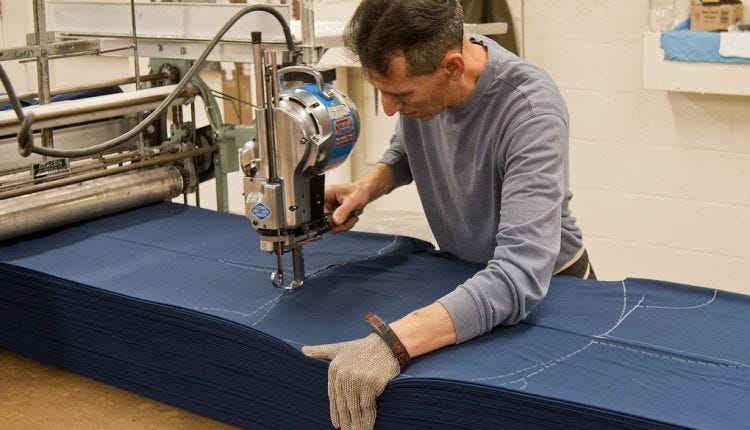
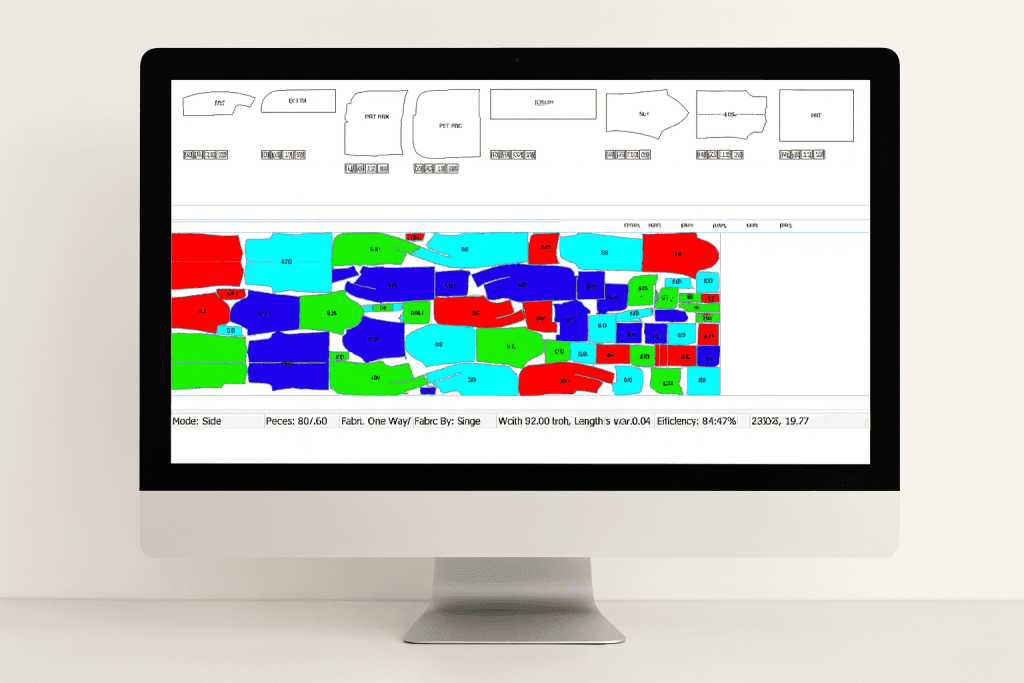
Marker efficiency (how well pattern pieces nest on fabric before cutting) is one of the most direct levers manufacturers have on material cost. A 3 to 5 percent reduction in fabric usage across a full production run is not a rounding error. At volume, it is a meaningful recovery of margin that compounds across every order.
But marker efficiency is constrained by pattern quality. A marker built on imprecise pattern geometry cannot nest as tightly as one built on clean, accurate curves. Gaps appear not because the nesting algorithm is weak but because the pattern pieces themselves do not represent the garment accurately enough to allow tighter placement.
This is the connection most fabric waste conversations miss. Marker optimization tools can only work with what the pattern gives them. If the pattern arrived from development with segmented curves that were manually corrected (or not corrected at all) the marker reflects that imprecision in the form of fabric gaps that look like nesting inefficiency but are actually pattern inaccuracy.
Genuine apparel and textile pattern design software treats marker efficiency as a downstream outcome of pattern accuracy, not a separate optimization step. When patterns are built or imported correctly from the start, markers can be generated automatically with confidence that the geometry is sound.
PolyNest, developed by Polygon Software since 1986, was built to handle the complete pattern-to-production workflow (pattern design, grading, marker making, and cutting preparation) inside one system. That means the accuracy built into a pattern in development carries forward into grading and marker generation without re-entry, manual correction, or geometry drift between stages.
For apparel and textile manufacturers, this delivers across the full workflow:
The DXF import improvement is worth highlighting specifically. Patterns imported from external systems like other manufacturers, design partners, legacy software, now import as true curves rather than point-to-point segments. Armholes and contours that previously required manual cleanup import ready for grading and marker making. For manufacturers pulling patterns from multiple sources, that change alone reduces a significant amount of upstream correction time.
Companies using PolyNest report up to 30% time savings in pattern making and grading, and 3% to 5% reductions in fabric costs through optimized markers. Those numbers reflect what happens when pattern accuracy and marker efficiency are handled in the same system rather than patched together across two.
Teams evaluating pattern design platforms often look at general CAD tools alongside apparel-specific systems. General CAD platforms offer strong geometry tools but were not designed around garment grading logic, marker making, or the DXF interoperability requirements of sewn-products manufacturing. They can handle pattern shapes but typically require significant configuration to function in a production apparel workflow.
Apparel-specific tools vary most in how tightly pattern design, grading, and marker making are connected. Some platforms handle pattern design well but rely on separate tools for marker generation. Others offer marker making but require patterns to be imported from a separate design system, reintroducing the handoff problem that creates correction work in the first place.
The question worth asking in any evaluation is whether a change to a pattern in development automatically flows through grading and into marker generation, or whether each stage requires a separate update. That answer reflects how much manual work the software is actually eliminating versus just organizing.
For manufacturers operating across multiple facilities or working with patterns from external partners and suppliers, the coordination challenge compounds fast. Patterns coming from different systems need to import cleanly. Graded sizes need to stay consistent across locations. Markers need to be shareable with cutting rooms using different equipment.
PolyNest supports collaboration across multiple locations and is compatible with inputs from different manufacturers and product types. Patterns can be imported from other grading and marking systems, reducing the friction that typically comes with multi-source production environments. Integration with automatic cutting systems and a variety of plotters means the output of the marker making process translates directly to the floor, regardless of what cutting equipment each facility runs.

What is an apparel and textile pattern design software system? It is a platform that enables garment and textile products manufacturers to create, modify, and grade patterns and prepare optimized markers for the cutting floor. A purpose-built system handles the full workflow from design through production preparation, keeping pattern accuracy intact across grading and marker generation.
How does PolyNest handle patterns imported from external systems? PolyNest interprets DXF imports as true curves rather than point-to-point segments, producing accurate garment geometry for curves like armholes and necklines. This reduces manual cleanup and allows imported patterns to move directly into grading and marker making.
How does pattern accuracy affect fabric waste? Markers built on imprecise patterns cannot nest as efficiently as those built on accurate geometry. Gaps in the marker layout that appear to be a nesting issue are often a pattern quality issue. PolyNest addresses both in the same system, accurate patterns produce better markers, and better markers reduce fabric waste.
Does PolyNest integrate with cutting systems? Yes. Markers generated in PolyNest can be sent directly to automatic cutting systems and plotters, eliminating intermediate steps between marker making and cutting floor execution.
Is PolyNest scalable for growing manufacturers? Yes. PolyNest supports operations from small design teams to large multi-facility global manufacturers, with compatibility across hardware and software environments that protects long-term technology investments.
Fabric waste does not start at the marker. It starts when a pattern leaves development without the accuracy needed to grade cleanly and nest efficiently. By the time that imprecision shows up in a fabric utilization report, it has already compounded across every size run and every marker built on that pattern.
PolyNest was built by Polygon Software to close that gap, connecting pattern design, grading, and marker making in one system so accuracy in development translates directly into efficiency on the floor. For manufacturers where pattern quality and material cost are connected concerns, PolyNest is worth evaluating as your apparel and textile pattern design software.
→ Follow PolyPM and PolyNest’s updates on LinkedIn and Facebook for insights on pattern design and apparel manufacturing software. You can also read verified client reviews on Capterra.