
For manufacturers producing uniforms, licensed apparel, fashion collections, or high-variation team orders, apparel inventory management software determines how fast production can actually move. When inventory data breaks down, production slows or stops.
Manufacturers operating in markets such as Los Angeles, New York, Miami, Chicago, Houston, and Greenville, as well as nearshore regions including Guatemala City, San Pedro Sula, Tegucigalpa, San Salvador, and Managua, face inventory challenges that most industries never encounter. Dye lots, shrinkage, fabric rolls, cut plans, bundle movement, embellishment components, trims, and subcontractor WIP all introduce complexity that generic systems are not built to manage.
This is why apparel inventory management software must go far beyond basic stock counts. In 2026, manufacturers need real-time, production-linked inventory visibility that reflects what is actually happening on the factory floor.
Apparel inventory behaves differently than inventory in electronics, furniture, or consumer goods. Fabric transforms as it moves through production, and inventory state changes continuously.
Common apparel-specific inventory challenges include:
• Dye lots and shade variation
• Fabric shrinkage and yield differences
• Roll-level tracking
• Cut plans and layer planning
• Bundle movement across operations
• Embellishment components
• Subcontractor-held materials
• Frequent product and order changes
Apparel inventory management software must be designed to handle inventory that is always in motion.
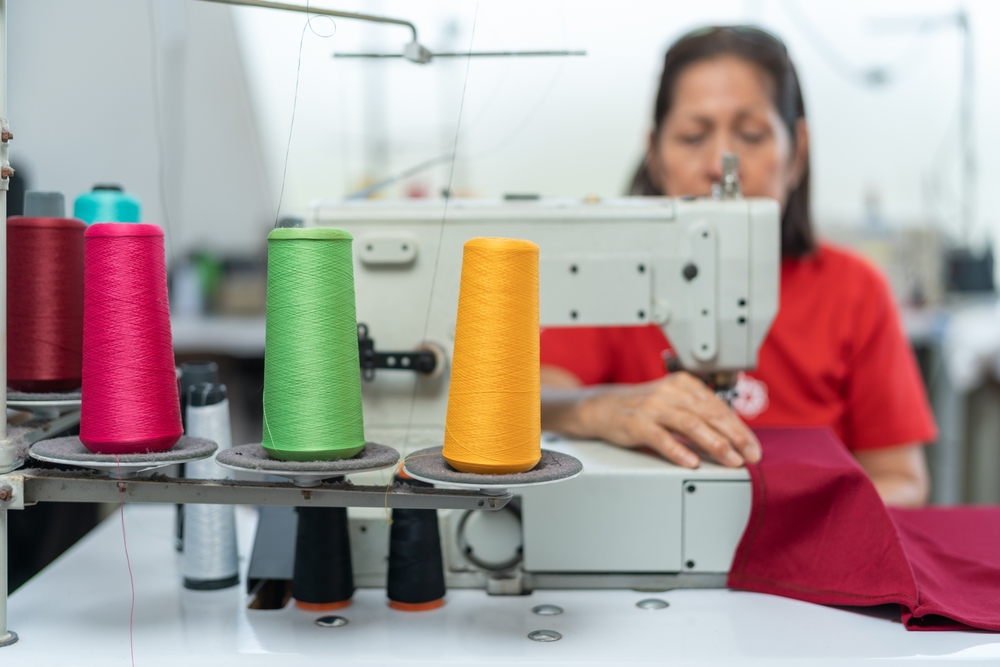
Generic systems treat fabric as a single SKU. Apparel production does not.
Apparel inventory management software must manage:
• Dye lot control
• Shade matching
• Roll-level metadata
• Shrink test results
• Width variation
• Yield forecasting
When dye lots are mixed incorrectly, entire production runs can be delayed or rejected. A single mismatch can destroy margins and push ship dates.
Most ERPs rely on theoretical BOM yields that never reflect what happens on the cutting floor.
Apparel production requires inventory accuracy based on:
• Marker efficiency
• Lay plans
• Shrink test adjustments
• Roll-specific variation
• Waste and remnants
Even a small yield error of 2 to 4 percent can create shortages halfway through production, forcing emergency reorders or partial shipments.
Generic inventory systems assume WIP is stationary. In apparel, it is not.
Work in progress flows continuously through:
• Cut
• Fuse
• Bundle
• Sew
• Embellish
• Assemble
• Finish
• Pack
• Ship
Without real-time scanning, manufacturers lose visibility into where work is actually stuck, delayed, or missing.
Generic systems also fail when inventory leaves the building.
Many apparel manufacturers rely on subcontractors for embroidery, screen printing, sublimation, sewing, and finishing. When subcontractors run out of fabric or trims, production stops immediately. Without connected apparel inventory management software, these shortages are invisible until schedules slip.
Inventory challenges also continue after production. Finished goods in apparel are rarely final due to replacements, partial shipments, late roster updates, decoration substitutions, or re-orders. Generic inventory systems treat finished goods as static, which leads to shipment errors, reconciliation issues, and customer disputes.
This is why apparel companies need apparel inventory management software built to manage inventory that is constantly in motion.
→ Do you lose visibility once work leaves the cutting room or goes to subcontractors? Contact PolyPM to see how real-time apparel inventory management software tracks WIP, subcontractors, and finished goods without blind spots.
Modern apparel inventory management software must provide real-time, production-linked visibility across the entire lifecycle.
In 2026, the standard includes:
• Real-time raw material visibility
• Roll-level tracking
• Shrinkage integration
• Automated receiving
• Barcode and RFID scanning
• Bundle-level WIP tracking
• Fabric reconciliation
• Dye lot validation
• Automated shortage alerts
• Finished goods traceability
This is the baseline manufacturers now expect.
PolyPM was built to manage inventory that is constantly in motion. Its apparel inventory management software ties inventory directly to cut planning, WIP, labor, and production scheduling.
PolyPM supports:
• Fabric reconciliation across markers, shrink tests, and actual yield
• Dye-lot-specific allocation rules
• Barcode and RFID bundle scanning
• Vendor API receiving and automated ASN ingestion
• Real-time visibility into what is sewable versus theoretical
• Live WIP tracking from cut through sew, embellish, pack, and ship
• Raw-to-finished-goods traceability for compliance
This allows manufacturers to see inventory as it truly exists, not how it looked hours or days ago.

Every fabric roll is captured with the details apparel manufacturers actually need:
• Yardage
• Width
• Weight
• Color and dye lot
• Vendor details
• QC notes
• Shrink test results
This ensures the right fabric goes to the right style and that yield calculations reflect production reality.
PolyPM reduces receiving errors by:
• Importing ASNs
• Automatically matching purchase orders
• Validating quantities and dye lots
• Syncing vendor updates in real time
This prevents shortages and mismatches before they reach the production floor.
Instead of relying on theoretical BOM yields, PolyPM provides visibility into:
• Marker efficiency
• Actual production yields
• Shrink test integration
• Waste percentage
• Over and under usage
• Roll allocation history
Manufacturers typically reduce fabric waste by 2–6 percent when planning is based on reconciliation rather than assumptions.
Every cut ticket in PolyPM ties directly back to:
• Fabric rolls
• Dye lots
• Markers
• Layers
• Fabric usage
• Remaining yardage
• Bundle generation
This provides clear visibility into what can be cut and what cannot, before production begins.
Every bundle and operation is scanned across:
• Sewing lines
• Subcontractors
• Embellishment stations
• Quality control
• Finishing
• Packing
Supervisors gain visibility into bottlenecks, idle stations, workflow issues, and accurate ship readiness.
PolyPM alerts teams before cutting begins when:
• Fabric is insufficient
• Dye lots do not match
• Trims are missing
• Vendors are late
• BOMs are misaligned
• Inventory will block production
This prevents expensive mid-run stoppages and last-minute firefighting.
PolyPM tracks subcontractor inventory and progress, including:
• What was sent
• What is currently held
• What has been completed
• What remains
• What requires rework
Every subcontractor location becomes an extension of the factory rather than a blind spot.
Once products reach finishing, PolyPM ensures:
• Ship packs match orders
• Substitutions are recorded
• Overages and shortages are flagged
• Team rosters are validated
• Player names and numbers are tracked
• UPC and GTINs are assigned automatically
Manufacturers always know what is actually ready to ship.
→ Do you still double-check inventory in spreadsheets before committing to production or shipping? Contact PolyPM to see how apparel inventory management software gives teams a single, reliable source of truth.
Manufacturers running PolyPM report:
• Reduced fabric waste
• Faster cut planning
• More accurate purchasing
• Fewer shortages and stoppages
• Better subcontractor coordination
• Higher first-time-right shipments
• Improved on-time delivery
Inventory shifts from being a constant emergency to a predictable, controlled part of operations.
Most systems:
• Do not track rolls
• Do not understand yield
• Do not manage bundle-level WIP
• Do not integrate cut plans
• Do not support embellishment workflows
• Do not provide subcontractor visibility
PolyPM does all of these natively and ties them into one real-time system spanning PLM, ERP, production planning, WIP, inventory, and shipping.

Apparel inventory management software is designed to manage fabric, trims, WIP, and finished goods across complex apparel production workflows, including dye lots, shrinkage, cut plans, and subcontractors.
Generic systems lack support for roll-level tracking, yield variation, bundle movement, and decoration workflows that are essential in apparel manufacturing.
Real-time WIP tracking shows where materials and bundles actually are, preventing shortages, delays, and incorrect shipment assumptions.
Yes. Manufacturers operating in regions such as Guatemala City, San Pedro Sula, Tegucigalpa, San Salvador, and Managua rely on real-time visibility to coordinate materials, subcontractors, and shipments.
By aligning marker plans, shrink tests, and actual usage, reconciliation prevents over-ordering and mid-run shortages.
Yes. Apparel inventory management software supports a wide range of apparel and textile operations, including clothing and uniform manufacturing, swimwear production, embellishment workflows like embroidery and screen printing, and raw fabric or textile operations that require roll-level tracking and dye lot control.
In 2026, apparel manufacturers can no longer rely on inventory systems designed for generic industries. Real-time visibility from raw materials through finished goods is now a requirement.
PolyPM delivers apparel inventory management software built specifically to support dye lots, actual yield, cut plans, bundle movement, subcontractors, embellishment workflows, and high-variation production.
→ If inventory surprises are still impacting schedules or margins, it may be time to reassess your system. Contact PolyPM to discuss whether real-time apparel inventory management is the right fit for your operation.
→ Follow us on LinkedIn and Facebook for more updates on apparel inventory management softwares