
A garment manufacturing ERP software system is not defined by accounting strength or reporting dashboards. It is defined by whether it can handle real production pressure without forcing manufacturers back into spreadsheets, paid-add ons, disconnected tools, or costly reimplementation cycles.
In garment manufacturing, product changes are constant. Variations multiply. Decoration rules shift. BOMs evolve. Production rarely stays clean. When a system cannot keep PLM, production, inventory, and costing aligned in real time, operational risk increases quickly.
For manufacturers evaluating a garment manufacturing ERP software solution in 2026, the real question is not “Can it generate reports?”, the real question is whether the system is structurally built for the specific execution demands of your product or not.
Manufacturers searching for garment manufacturing ERP softwares are trying to solve specific operational issues across categories such as swimwear, footwear programs, workwear, uniforms, teamwear, licensed garments, accessories, and promotional products.
The most common challenges include:
• Product changes reaching production too late
• BOMs and artwork being re-entered across systems
• Decoration planned outside the manufacturing schedule
• Inventory ordered against outdated data
• Limited visibility into work in progress
• Systems that break under high variation
In 2026, manufacturers expect their garment manufacturing ERP software to keep product data, production execution, inventory, and change management aligned inside one environment. Systems that separate PLM, ERP, and decoration workflows struggle as variation and customization increase.
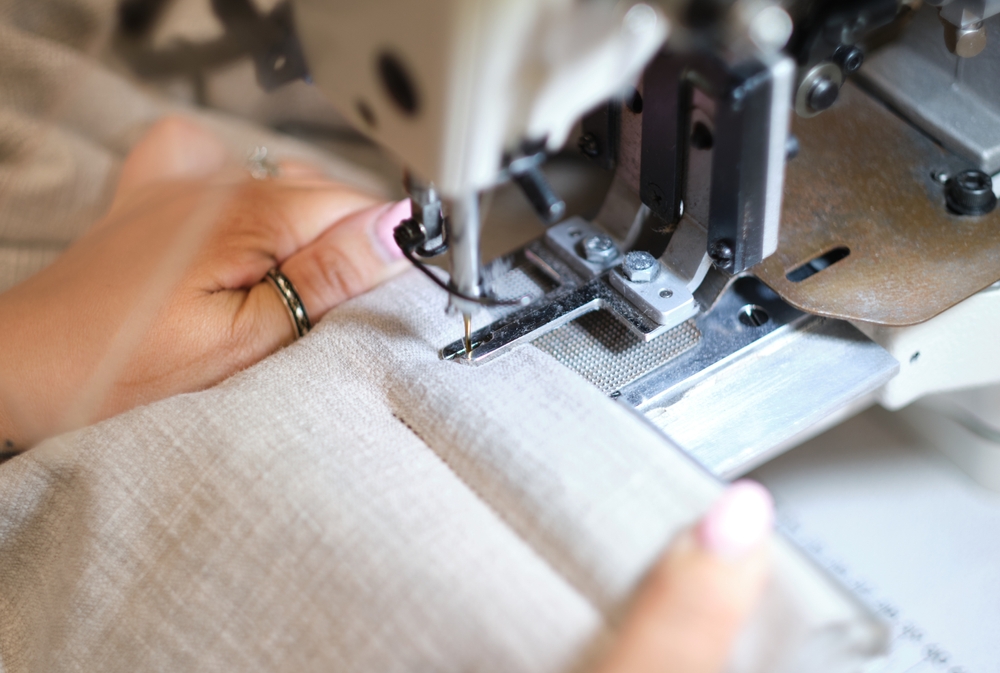
Many ERP platforms are strong in finance and reporting. However, garment manufacturing complexity does not emerge in accounting, it emerges in execution, on the cutting floor, in variation management, and in real-time WIP.
A modern garment manufacturing ERP software solution must support:
• Cut and sew manufacturing running natively inside the ERP
• Decoration such as embroidery, screen printing, and sublimation scheduled as production
• Inventory and WIP reflecting actual factory activity
• Production workflows that remain stable under frequent changes
If manufacturing is treated as an add-on, or decoration is managed externally, the system becomes dependent on spreadsheets and timely manual coordination.
For manufacturers producing high-variation programs like swimwear with multiple placements, uniform programs, workwear configurations, and decorated footwear lines, execution accuracy determines whether margins hold or erode.
When PLM and ERP operate separately, teams spend significant time re-entering data and reconciling differences. That creates version conflicts, incorrect cut plans, and delays.
Garment manufacturing ERP softwares built on a unified PLM + ERP foundation eliminates those gaps.
With a unified structure:
• PLM data flows directly into production without re-entry
• BOM updates reflect immediately in costing and purchasing
• Artwork and embellishment rules stay aligned with execution
• Production changes update inventory and WIP in real time
This removes the reliance on manual spreadsheets and reduces the risk of outdated information reaching the factory floor.
Garment manufacturers evaluating a garment manufacturing ERP software system should look closely at whether product changes flow automatically into production or require manual intervention.
Variation complexity is where many systems fail.
Programs involving swimwear, workwear, uniforms, licensed apparel, and decorated products often include:
• Fabric substitutions
• Trim changes
• Colorway additions
• Embellishment adjustments
• Customer-specific requirements
• Compliance-driven modifications
An efficient garment manufacturing ERP software solution must synchronize these changes across costing, purchasing, planning, and production automatically.
Automated variation logic should support:
• High-variation teamwear and roster-based programs
• Configuration-heavy workwear and safety apparel
• Decorated products requiring placement rules and numbering logic
• Multi-component constructions across different product categories
When variation logic collapses, teams revert to spreadsheets. That is usually the first signal that the system was not built for garment manufacturing depth.
Work in progress in garment manufacturing is constantly moving:
• Cut
• Bundle
• Sew
• Embellish
• Finish
• Pack
• Ship
A garment manufacturing ERP software system must provide bundle-level visibility across these stages. Without real-time tracking, supervisors cannot see where production is slowing, where bottlenecks exist, or whether orders will ship on time.
True WIP visibility allows teams to monitor:
• Every bundle
• Every operation
• Every handoff
• Every delay
• Every subcontractor interaction
When your garment manufacturing ERP software solution reflects real production activity instead of theoretical schedules, operational surprises decrease significantly.
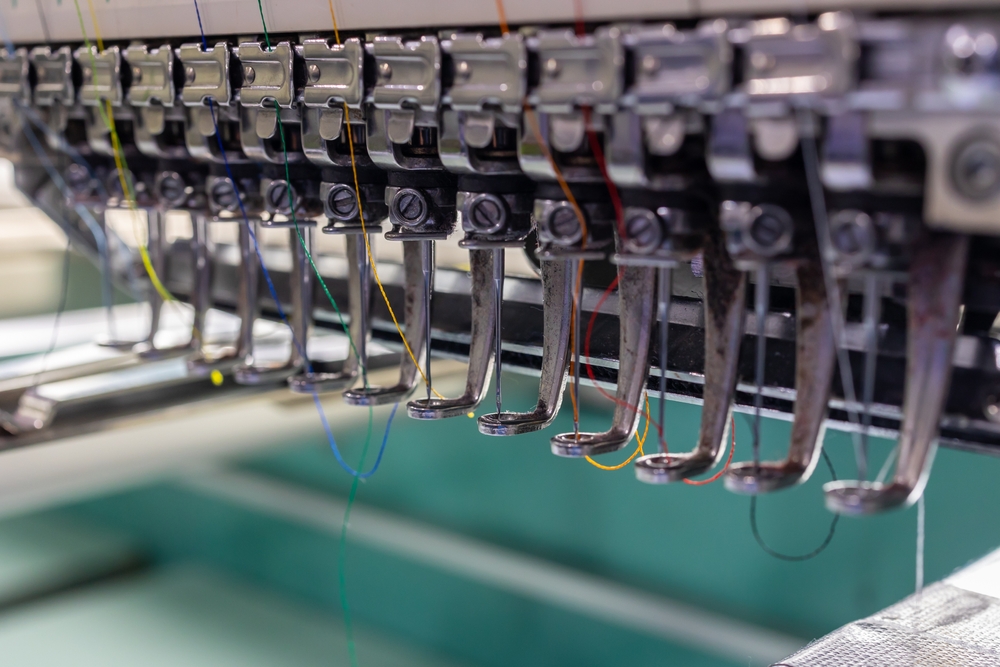
Fabric remains one of the most expensive inputs in garment production. A garment manufacturing ERP software solution must reflect actual production parameters rather than relying solely on theoretical BOM yields.
Integrated cut planning supports:
• Marker efficiency
• Shrink management
• Roll allocation
• Layer counts
• Dye-lot control
• Cut-ticket generation tied directly to WIP
• Real-time material consumption updates
When cut planning connects directly to inventory and WIP, teams gain visibility into what is sewable versus what is theoretical. This reduces mid-run shortages and last-minute adjustments.
One issue rarely discussed during ERP evaluations is reimplementation.
Some non-specialized ERP platforms, like NetSuite, require disruptive upgrade cycles that resemble full system replacements. These projects often introduce significant cost, downtime, and workflow risk.
PolyPM operates differently.
PolyPM customers upgrade version to version without reimplementation, without external redevelopment projects, and without production disruption. Custom workflows remain intact, and manufacturing continues uninterrupted.
For manufacturers evaluating a garment manufacturing ERP software system for long-term stability, upgrade structure and continuity matter just as much as features.
The right garment manufacturing ERP software solution is not the one with the longest feature list. It is the one that continues to function when production becomes complex.
Manufacturers need a garment manufacturing ERP software system that:
• Keeps PLM, ERP, and production aligned
• Supports decoration as part of manufacturing
• Handles high variation without collapsing
• Provides real-time WIP visibility
• Integrates cut planning and inventory
• Upgrades without disruptive reimplementation
For manufacturers seeking structural execution depth, PolyPM was built specifically for garment and textile manufacturing workflows.
→ Contact a PolyPM expert (Spanish or English speaking!) to start the conversation. Let’s assess your software today!
→ Follow our PolyPM company page on LinkedIn and Facebook for more insights on garment/textile manufacturing and ERP strategy.
Is garment manufacturing ERP software suitable for manufacturers operating across the U.S. and nearshore regions?
Yes. Companies operating in production centers such as Los Angeles, New York, Miami, Chicago, Houston, and Greenville, along with nearshore regions including Guatemala City, San Pedro Sula, Tegucigalpa, San Salvador, and Managua, use garment manufacturing ERP softwares to keep product data, production execution, and inventory aligned across distributed locations.
Who benefits most from a garment manufacturing ERP software system?
Any garment, apparel or textile company. Companies producing swimwear, workwear, uniforms, footwear programs, decorated apparel, and other high-variation textile products benefit most from garment manufacturing ERP software systems built for execution depth.
Why do manufacturers replace generic ERP systems?
Because generic systems often push production workflows, decoration management, and variation handling outside the ERP, increasing operational risk and errors.
What should manufacturers look for in a garment manufacturing ERP software solution?
Unified PLM + ERP structure, real-time WIP visibility, automated variation logic, integrated cut planning, inventory alignment, and stable upgrade paths without reimplementation – features that PolyPM supports.
Why do manufacturers choose PolyPM for garment manufacturing ERP software?
PolyPM, developed by Polygon Software, was built specifically for garment and textile manufacturing environments. It operates as a unified PLM + ERP system on a single database, allowing product data, production workflows, inventory, variation logic, and real-time WIP tracking to remain fully aligned without manual reentry or disruptive reimplementation cycles.
This content is based on publicly available information, product documentation, and industry expertise at the time of publication. Features, capabilities, and upgrade structures may vary depending on configuration, implementation approach, and software version. This material is provided for informational purposes only and does not constitute technical, legal, or financial advice. All product names, trademarks, and brands mentioned are the property of their respective owners.